How to Prepare Your Private Transportation for the FIFA World Cup in NYC

Updated: Oct 6
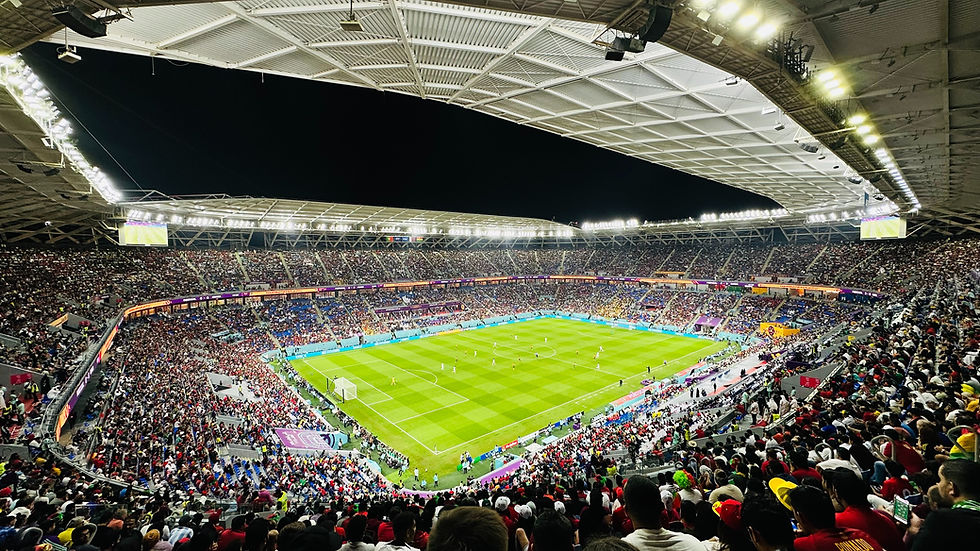
Preparing private transportation for the FIFA World Cup in NYC begins before a vehicle is assigned or a chauffeur is confirmed. For executives, principals, and senior guests, the real concern is not simply how to arrive at MetLife Stadium. It is how to preserve control over a visible day in which airport timing, hotel departures, venue access, guest expectations, match duration, and post-match movement all compress into a narrow operating window.
That distinction matters. A World Cup match in the New York area is not an ordinary stadium movement. The guest may be arriving from JFK Airport, LaGuardia Airport, Newark Liberty International Airport, or Teterboro Airport. The itinerary may begin in Midtown, Tribeca, the Upper East Side, Central Park South, Wall Street, or a private residence in New Jersey or Connecticut. The day may also include hospitality, client hosting, family members, advisors, dinner reservations, or onward aircraft timing.
For executive travelers, preparation should not feel dramatic. It should feel quiet, disciplined, and already resolved. The strongest plans clarify who is moving, what must be protected, where flexibility exists, and who has authority to make decisions if the day changes. Vehicle quality matters, but the operating model matters more. The difference between a pleasant transfer and a controlled journey is almost always preparation.
Table of Contents
Private Transportation for the FIFA World Cup in NYC Is a Preparation Exercise, Not a Vehicle Choice
Coordinate Airports, Hotels, and Private Aviation as One Itinerary
What Executive Teams Should Confirm Before Requesting Coordination
How to Prepare Your Private Transportation for the FIFA World Cup in NYC
Private Transportation for the FIFA World Cup in NYC Is a Preparation Exercise, Not a Vehicle Choice
The first planning error is assuming that private transportation for the FIFA World Cup in NYC begins with the question of which vehicle is appropriate. For executive guests, that question comes later. The earlier question is what the day is being asked to protect. A single principal traveling from a Midtown hotel to MetLife Stadium requires a different operating posture than a corporate host managing clients, family members, advisors, and a post-match dinner in Manhattan.
This is why preparation should start with the itinerary rather than the fleet. A Cadillac Escalade, Mercedes-Benz Sprinter, or executive sedan may each be appropriate under different circumstances, but none solves an unclear movement plan. The real work is identifying the timing windows, guest count, luggage or personal items, hospitality requirements, access assumptions, privacy sensitivity, and the person authorized to make adjustments on the day of service.
The FIFA World Cup creates unusual pressure because it attracts travelers who normally expect a high level of control. Senior executives may be accustomed to aircraft timing, private hospitality, and tightly managed calendars. Yet stadium environments compress control. Departures must be planned earlier than instinct suggests. Return timing may depend on pedestrian flows, parking procedures, traffic release, law enforcement direction, and whether guests remain for hospitality or leave immediately after the final whistle.
The Match-Day Readiness Stack
VIP NYC Transfers evaluates World Cup preparation through a practical readiness stack. The first layer is itinerary hierarchy: which moment matters most if the day becomes compressed. For one executive, that may be a timely arrival before hospitality opens. For another, it may be a discreet departure after the match. For a corporate host, it may be keeping all guests together while preserving a separate path for the principal.
The second layer is venue access posture. A World Cup match at MetLife Stadium should not be treated as if access will behave like a normal event. The plan should account for where the vehicle may stage, what parking or access documentation may be required, whether walking distance is acceptable for the guests, and how venue rules may affect larger vehicles. A polished plan does not depend on optimism. It identifies the preferred path, the acceptable backup, and the decision point for switching between them.
The remaining layers are guest movement profile, communication chain, post-match recovery, and contingency authority. These are the details that determine whether the experience remains composed when the day changes. Who must travel together? Who should receive chauffeur details? Who approves additional time? What happens if hospitality runs long or a dinner reservation shifts? When these questions are answered before match day, the chauffeur service can operate with calm precision rather than public improvisation.
Clarify the Principal, the Party, and the Decision Chain
Executive transportation planning depends on hierarchy. The principal may not be the person booking the service, paying the invoice, speaking with the concierge team, or traveling in the largest group. For FIFA World Cup movements, that distinction should be clarified early. The chauffeur and concierge team should know whose timing is most important, who should be addressed directly, and who should be shielded from operational detail.
A chief of staff or executive assistant may be coordinating for a principal traveling with family members, clients, or board-level guests. In that case, the transportation plan should not treat the party as a generic group. It should recognize the social architecture of the day. Who arrives together? Who should not wait in a public area? Who may require a quieter vehicle environment? Who is likely to change plans? These details shape the experience more than broad luxury language ever could.
The decision chain is equally important. A well-prepared itinerary has a single operational lead who can confirm timing, respond to chauffeur communication, and make practical decisions if conditions change. That person does not need to manage every detail manually. Rather, they provide the authority that allows the concierge team to execute without confusion. In executive settings, the absence of decision authority is often the hidden source of friction.
Build the Day Around Timing Exposure, Not Distance
New York-area transportation is often discussed in terms of distance, but FIFA World Cup planning should be built around timing exposure. The distance from Manhattan to MetLife Stadium is only one variable. The more important question is how many moments in the itinerary can become vulnerable: hotel departure, tunnel or bridge approach, venue access, guest screening, hospitality arrival, post-match exit, traffic release, and return to the next destination.
For executives, timing exposure is not merely inconvenience. It can affect client hosting, aircraft schedules, dinner commitments, family comfort, and the principal’s sense of control. A late departure from Midtown may not look serious on paper, but once it collides with event-day congestion, security patterns, and venue access rules, the lost margin can become visible. Sophisticated planning creates time buffers without making the guest feel overmanaged.
This is where a concierge transportation plan differs from a basic transfer. The plan should identify the non-negotiable time, then work backward. If the principal must be in hospitality by a certain point, the departure is not calculated from usual traffic. It is calculated from match-day conditions, arrival procedure, guest movement pace, and acceptable stress level. The more senior the guest, the less the plan should rely on perfect conditions.
Treat Venue Access and Post-Match Movement as the Same Risk
For FIFA World Cup matches, venue access should be approached with discipline. MetLife Stadium is a major event environment even under ordinary circumstances. During the World Cup, access patterns may be affected by event-specific instructions, parking controls, pedestrian flows, public safety measures, and restrictions on where certain vehicles may enter or wait. A strong plan does not assume the most convenient scenario. It prepares for the one that is actually available.
This is especially important for larger parties. A Sprinter-style configuration may be ideal for keeping a group together, but the event environment may place constraints on where larger vehicles can stage or access. Multiple executive SUVs may provide more flexibility but require more coordination if guests must remain together. The right choice depends on the access posture, guest hierarchy, and tolerance for walking or reconnection.
The post-match plan should be treated as part of the same risk. Before the match, everyone is aligned around the same objective: arrive well and settle into the event. After the match, objectives can diverge. One guest wants to leave immediately. Another wants to remain. A principal wants privacy. A client wants to continue the evening. A family member is tired. A dinner reservation is approaching. The chauffeur can execute, but only if the expected decision path has already been established.
Coordinate Airports, Hotels, and Private Aviation as One Itinerary
Many FIFA World Cup guests will not experience match day as an isolated event. The match may sit inside a broader New York itinerary that includes airport arrivals, hotel check-in, meetings, private dinners, family obligations, or aircraft departures. That is why private transportation should be prepared as one coordinated journey rather than a collection of separate transfers.
A principal arriving at Teterboro Airport may need direct movement to a hotel, a short rest period, and then a timed departure to MetLife Stadium. Another guest may arrive through Newark Liberty International Airport on match day and continue directly to hospitality. A corporate host may have clients arriving through different airports and staying across Manhattan. In each case, the service standard depends on continuity: one itinerary view, one communication chain, and one understanding of timing priorities.
Hotel coordination also matters. Major hotels around Central Park South, Midtown, Fifth Avenue, Madison Avenue, Hudson Yards, SoHo, and Tribeca each have their own curb dynamics, loading patterns, and lobby procedures. A prepared plan accounts for where the vehicle can position, how the guest prefers to be met, whether luggage is involved, and whether the departure should be discreet or more visible. The best hotel departure is calm because the details have already been settled.

What Executive Teams Should Confirm Before Requesting Coordination
Before requesting coordination, an executive team should prepare a concise set of facts. The most useful details are not complicated: match date, pickup address, desired arrival posture, number of guests, luggage or personal items, preferred vehicle type if known, post-match destination, lead contact, backup contact, and any privacy or hierarchy considerations. These details allow the concierge team to assess fit and advise with precision.
The team should also clarify what is flexible. Is the departure time adjustable? Is the party willing to arrive earlier to reduce timing exposure? Can dinner be moved if post-match release is slow? Is the guest count firm? Can the group split into two vehicles if access conditions make that more practical? Knowing the flexibility points allows the transportation plan to be more honest and resilient.
Finally, the team should confirm how communication should feel. Some principals prefer no operational messages unless necessary. Some assistants want detailed updates. Some family offices prefer a single point of contact. Some corporate hosts need visibility without interrupting the guest experience. Communication style is part of the service design. By the time the chauffeur is assigned, the plan should already have a clear shape.
Comparison Matrix
Preparation Dimension | VIP NYC Transfers Reference Standard | Underprepared Approach | Executive Risk if Missed |
Itinerary hierarchy | Principal, guests, timing priorities, and decision authority are clarified before service | Vehicle is selected before operating priorities are understood | The wrong element of the day is protected |
Venue access posture | Preferred access, realistic staging, and backup options are discussed in advance | Stadium access is assumed based on ordinary event experience | Delays, walking distance, or reconnection issues become visible |
Guest movement profile | Party size, hierarchy, privacy needs, and group behavior are built into the plan | All passengers are treated as one generic group | The principal may wait, separate awkwardly, or lose privacy |
Communication chain | One lead contact and one backup contact are established | Multiple stakeholders communicate independently | Chauffeur instructions become fragmented |
Timing exposure | Departure and return windows are planned around event-day compression | Timing is estimated from ordinary distance or traffic assumptions | Hospitality, dinner, or airport connections become vulnerable |
Post-match recovery | Return movement is planned before arrival at the stadium | The exit plan is addressed only after the match | The most congested moment of the day becomes reactive |
Airport and hotel continuity | Arrivals, departures, hotels, and match movement are coordinated as one itinerary | Each transfer is arranged separately | The day lacks a single operating view |

How to Prepare Your Private Transportation for the FIFA World Cup in NYC
For executives, advisors, and corporate teams preparing for the FIFA World Cup in NYC, VIP NYC Transfers can assist in shaping a private transportation plan with discretion, clear timing logic, and careful coordination across the full itinerary. To request coordination, share the match date, pickup location, guest count, and any airport, hotel, or post-match obligations that should be protected.
FAQ Section
When should executives prepare private transportation for the FIFA World Cup in NYC?
Executives should begin preparing private transportation for the FIFA World Cup in NYC as soon as match attendance, guest count, and hospitality timing are reasonably clear. Early preparation allows the concierge team to evaluate timing exposure, access assumptions, vehicle fit, and post-match continuity before the highest-pressure details become fixed.
What information should be shared before requesting coordination?
The most useful details are the match date, pickup address, number of guests, desired arrival timing, post-match destination, luggage or personal items, lead contact, backup contact, and any privacy or hierarchy considerations. These facts allow the transportation plan to be designed around the itinerary rather than only the vehicle.
Is the vehicle choice the first decision?
No. Vehicle choice should follow the operating plan. The concierge team should first understand the principal, the party, venue access assumptions, timing requirements, and post-match obligations. Once those are clear, the appropriate vehicle or vehicle combination can be assessed with more precision.
How should a chief of staff or executive assistant manage communication?
The best model is one lead contact and one backup contact. The lead contact should be authorized to confirm timing, approve reasonable adjustments, and receive chauffeur details. This avoids fragmented instructions and keeps the principal insulated from unnecessary operational detail.
What makes World Cup transportation different from a normal MetLife Stadium event?
World Cup transportation involves greater timing compression, higher guest expectations, event-specific access controls, larger regional demand, and more visibility around arrival and departure. A plan based on ordinary stadium experience may not be sufficient for executive guests.
Should post-match transportation be planned before the event?
Yes. The post-match movement is often the most sensitive part of the day. The plan should define where the guests are going, whether the vehicle remains on standby, how the party reconnects with the chauffeur, and who communicates once the match ends.
Can airport arrivals and match transportation be coordinated together?
Yes. For executive guests, airport arrivals, hotel movements, match transportation, dinner plans, and onward departures should be viewed as one itinerary. Coordinating them together helps protect timing, privacy, and continuity across the full day.
What if the itinerary changes on match day?
A prepared plan should identify who has authority to approve changes and which parts of the itinerary are flexible. If hospitality runs long, guest count shifts, or the post-match destination changes, the concierge team can adjust more calmly when the decision chain is already clear.