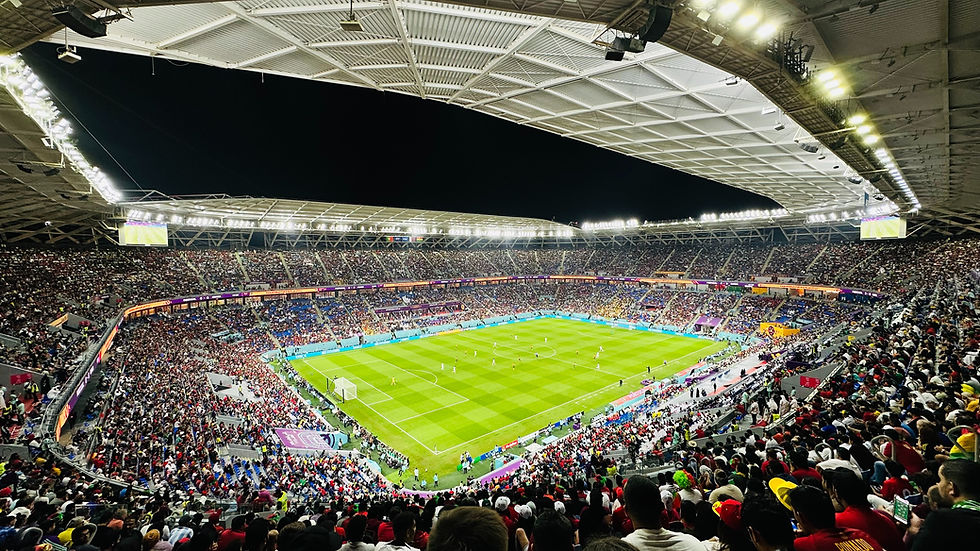
World Cup Private Chauffeur Service NYC for Executives

Updated: Sep 23
For executives evaluating World Cup private chauffeur service NYC planning, the most important question is not whether transportation can be arranged. It is who will control the decisions when the day begins to move. The FIFA World Cup creates unusual public attention, compressed timing, hospitality obligations, security sensitivity, and guest complexity. For a principal moving from Manhattan to NYNJ Stadium, the value of private transportation is not simply a refined vehicle. It is the presence of a quiet operating layer that protects judgment, privacy, and tempo across a day with little room for confusion.
The New York New Jersey schedule lists eight matches at NYNJ Stadium, with the remaining knockout dates including June 30, July 5, and the Final on July 19. That scale matters because the stadium event is not isolated from the rest of New York. Executives may arrive through JFK Airport, LaGuardia Airport, Newark Liberty International Airport, or Teterboro Airport; meet guests at a Midtown hotel; host advisors before the match; or return to a residence, dinner, or aircraft after the final whistle.
The hidden risk is rarely the obvious one. Sophisticated travelers already understand comfort, discretion, and professional chauffeur services. What they may underestimate is decision ownership. When guests change, hospitality timing shifts, aviation readiness moves, or a principal chooses a quieter return, the day needs one disciplined communication path. Without it, the executive team becomes the operating center. With it, the principal experiences the match as intended: present, protected, and unburdened.
Table of Contents

Why World Cup Private Chauffeur Service NYC Planning Starts With Governance
A luxury vehicle can support the experience, but it cannot govern the day. For executives, the first planning question should be: who has authority to change the plan, and who receives information when conditions shift? A principal should not be asked to resolve whether a guest is delayed, whether the group should divide, or whether the return should move from a hotel to a private aviation terminal. Those decisions need a pre-agreed structure before the day becomes public and compressed.
This is especially important during World Cup movement because the itinerary may involve people who do not normally travel together. A CEO may attend with family, investors, legal counsel, a board guest, or an international client. Each person may have different expectations around arrival time, conversation privacy, luggage, stadium access, and post-match plans. A generic transportation plan treats the group as a headcount. An executive plan treats the group as a hierarchy.
The distinction is not ceremonial. It determines vehicle count, passenger sequence, contact protocol, and contingency options. If the principal must remain reachable during the journey, the cabin environment matters. If a guest is likely to arrive late from SoHo or Hudson Yards, that guest should not control the principal’s departure. The chauffeur services must know which instruction is authoritative.
World Cup private chauffeur service NYC planning therefore begins with governance. The vehicle is selected after the decision architecture is clear. That sequence protects the day from avoidable negotiation at visible thresholds: hotel lobbies, private club entrances, stadium approaches, hospitality exits, and post-match collection points.
The Executive Movement Governance Model
The most useful framework is the Executive Movement Governance Model. It separates the transportation plan into four decision layers: principal authority, itinerary authority, guest authority, and operating authority. Principal authority defines what should never be compromised: privacy, timing, composure, and any sensitive obligation before or after the match. Itinerary authority determines who may approve changes to timing, routing, or destination. Guest authority clarifies who may request adjustments without disrupting the principal. Operating authority sits with the concierge team and chauffeur, within the confirmed service plan.
This model matters because high-profile event days often fail quietly before they fail visibly. A small change in one layer can affect all others. A dinner host asks to move the return. A guest wants to stop at a hotel. A family member prefers to leave early. A chief of staff needs the principal back near Wall Street for a confidential call. Without governance, every request feels equally urgent. With governance, the plan can absorb change without placing the principal in the middle.
The model also gives assistants and chiefs of staff a cleaner way to coordinate. Instead of forwarding every detail to the principal, they can define decision rights early. The assistant may approve a measured departure adjustment, but only the principal or chief of staff may approve a destination change after the match. A hospitality contact may share access details, but should not direct the chauffeur. A family guest may be accommodated, but not at the expense of the principal’s confirmed timing.
This level of structure should not feel heavy. In well-run private transportation, it feels almost invisible. The purpose is not to make the day rigid. It is to protect calm adaptation. The best plans are neither casual nor theatrical; they are clear enough that everyone knows who speaks, who decides, and who should be spared operational noise.
Where Executives Lose Control on World Cup Match Days
Executives usually lose control at handoffs, not during the journey itself. The first handoff may be the airport arrival. JFK, LaGuardia, Newark Liberty, and Teterboro each create different timing realities. A commercial arrival may require coordination around baggage and terminal conditions. A private aviation arrival may shift if aircraft readiness, crew timing, or ground handling changes. If the match is the same day, the transportation plan must connect airport timing to hotel readiness, guest assembly, and stadium arrival discipline.
The second handoff is the departure point in New York. Manhattan hotels, Upper East Side residences, Central Park South properties, private clubs, and corporate venues each carry a different visibility profile. A departure from a hotel lobby with advisors is different from a residence departure with family. A principal leaving a Midtown meeting may need a quiet cabin immediately. A group leaving a Fifth Avenue or Madison Avenue appointment may need tighter curb discipline because the setting is public and attention-sensitive.
The third handoff is the stadium approach. For executives, arrival is not only about getting close to the venue. It is about how the group exits, who leads, who waits, what is carried, and whether any conversation needs to remain private. If guests are unclear on the entry plan, the curb becomes a discussion point. If the principal is expected to manage the group, the service has already placed too much burden on the wrong person.
The fourth handoff is the return. This is where many plans become thin. The return may be affected by match duration, hospitality movement, guest separation, fatigue, or the principal’s preference to avoid public congestion. MetLife Stadium lists the Final for July 19 with a 3:00 PM start, doors opening at 11:00 AM, and parking lots opening at 10:00 AM, which illustrates how much of the day begins before kickoff and extends well beyond the match itself. A serious plan treats the return as its own operating environment.
What the Assistant or Chief of Staff Should Resolve Early
The assistant or chief of staff does not need to finalize every detail immediately. At the discovery stage, the more useful task is to identify the decisions that will later become difficult to make under pressure. The first is the principal profile. Is the executive attending primarily as a host, a guest, a family member, an investor, or a public-facing figure? Each profile changes what should be protected most carefully.
The second decision is passenger grouping. A single vehicle may support conversation and continuity when a principal is hosting two senior guests. Multiple coordinated vehicles may be more appropriate when family members, advisors, and hospitality contacts move on different timelines. This is not a question of preference alone. It is a question of hierarchy, privacy, punctuality, and whether one delayed traveler should affect the full group.
The third decision is communication authority. One point of contact should be defined for operational instructions. Others may receive updates, but the chauffeur and concierge team should not be placed in the position of reconciling competing messages from several guests. For executives, communication discipline is part of discretion. The fewer people directing the movement, the less visible the logistics become.
The fourth decision is post-match intent. Does the principal return to Manhattan, continue to dinner, separate from guests, proceed toward Teterboro, or remain flexible? The plan can allow flexibility, but it should not be blank. A blank return plan often turns into public improvisation. A flexible return plan defines likely scenarios, decision authority, and the communication path before the match begins.
How VIP NYC Transfers Frames the Discovery Conversation
VIP NYC Transfers should be evaluated less as a vehicle provider and more as a concierge transportation partner for the executive itinerary. The appropriate early conversation should begin with the match date, primary locations, principal expectations, guest structure, airport or private aviation details, hospitality obligations, and return preferences. These details allow the service to advise on timing logic and structure before a vehicle is assigned.
This is not overcomplication. It is the discipline required when a high-value traveler’s day crosses airports, hotels, event access, guest hosting, and post-match recovery. If a principal begins the afternoon in Tribeca, collects guests near Hudson Yards, attends the match, and returns to Central Park South, the transportation plan must protect more than distance. It must protect pacing, visibility, and the ability to make decisions without burdening the executive.
The conversation should also include operational limits. No serious provider should imply that a World Cup match day can be made immune to congestion, venue rules, access constraints, or late changes. The more credible standard is controlled coordination: disciplined planning, clear communication, appropriately selected vehicles, chauffeur professionalism, and a concierge team that understands when to advise rather than simply accept an address.
For discovery-stage executives, this is often the most valuable moment to engage. The itinerary may still be fluid, but the right questions can prevent later friction. A calm review of guest count, timing, access, principal hierarchy, and return scenarios can reveal whether the day requires one vehicle, a coordinated multi-vehicle structure, or a different approach for family, advisors, or hospitality guests.

The Difference Between Flexibility and Indecision
Executives often require flexibility, but flexibility should not be confused with an unfinished plan. A flexible plan defines acceptable variations. Indecision leaves the operating team to solve the day in real time. For World Cup match days, that difference is significant. When the principal is in motion, every unresolved issue competes with attention, privacy, and composure.
A strong private transportation plan can accommodate a later departure, a divided group, a modified return, or a shift from dinner to airport movement when those scenarios have been discussed. It becomes weaker when no one has clarified which changes are likely, who can authorize them, and how they should be communicated. The goal is not to eliminate change. It is to make change quiet.
For executives attending the World Cup from NYC, that restraint is the real standard. The vehicle should be immaculate, comfortable, and appropriate to the group, but the deeper value is the ability to protect the itinerary as it evolves. Luxury, in this setting, is control without noise.
Comparison Matrix
Governance Dimension | VIP NYC Transfers Reference Standard | Thin Planning Approach | Executive Risk Reduced |
Principal authority | Defines the principal’s timing, privacy, and composure as the organizing priority | Treats every traveler request as equal | Prevents the principal from becoming the logistics decision-maker |
Communication authority | Establishes one operational point of contact with clear escalation logic | Allows multiple guests to direct changes | Reduces conflicting instructions and visible coordination |
Guest hierarchy | Separates principal, family, advisors, hosts, and guests by timing and privacy needs | Plans only by passenger count | Protects departure discipline and cabin privacy |
Change control | Discusses likely scenarios before match day | Handles changes only when they occur | Allows adaptation without public improvisation |
Post-match intent | Defines likely return options and decision rights in advance | Treats the return as a simple reverse movement | Reduces exposure during the least stable part of the day |
Airport and hotel handoffs | Integrates airport, hotel, residence, venue, and stadium timing into one plan | Treats each segment separately | Protects continuity across the full itinerary |
Concierge judgment | Advises on structure before vehicle assignment | Quotes based on pickup time and vehicle class | Adds executive-level planning value before confirmation |

World Cup Private Chauffeur Service NYC for Executives
For executives, advisors, and executive teams evaluating World Cup private chauffeur service NYC planning, VIP NYC Transfers can support an early coordination conversation with discretion and operational clarity.
Share the match date, principal profile, guest structure, primary New York locations, airport or private aviation details, and any post-match expectations. Our concierge team will help outline a private transportation plan aligned with the full itinerary.
FAQ Section
What makes World Cup private chauffeur service NYC planning different for executives?
Executives require more than a vehicle and a departure time. The plan must define principal priority, guest hierarchy, communication authority, contingency logic, and post-match intent so the executive team is not forced to manage logistics during a public, compressed event day.
Who should control transportation decisions on match day?
One primary point of contact should control operational decisions, with clear escalation rules for material changes. Guests may receive updates, but the chauffeur and concierge team should not be asked to reconcile competing instructions from multiple travelers.
Should an executive group use one vehicle or multiple coordinated vehicles?
The decision should follow hierarchy, privacy, and timing. One vehicle may support conversation continuity for a principal and senior guests. Multiple coordinated vehicles may better protect timing when family members, advisors, or hospitality guests move on different schedules.
How early should an assistant request coordination?
Coordination should begin once the match date, approximate guest structure, primary New York locations, and post-match preferences are known. Early discussion allows the service to advise on timing logic and operating structure before the itinerary becomes difficult to adjust.
Can a private chauffeur service remain flexible after the match?
Yes, but flexibility works best when likely scenarios are discussed in advance. A flexible plan defines who may approve changes, which destinations are probable, and how updates should be communicated after the match.
What information should be shared before confirming services?
The most useful details include the match date, principal profile, guest count, hotel or residence, airport or private aviation details, hospitality commitments, luggage or personal items, and preferred return scenarios.
Why is decision governance relevant at the discovery stage?
Discovery-stage planning is the right time to clarify who decides, who receives updates, and which parts of the itinerary must be protected. Once the day is fixed, unresolved authority often becomes operational friction.