VIP Car Service World Cup Final NYC

Updated: Oct 6
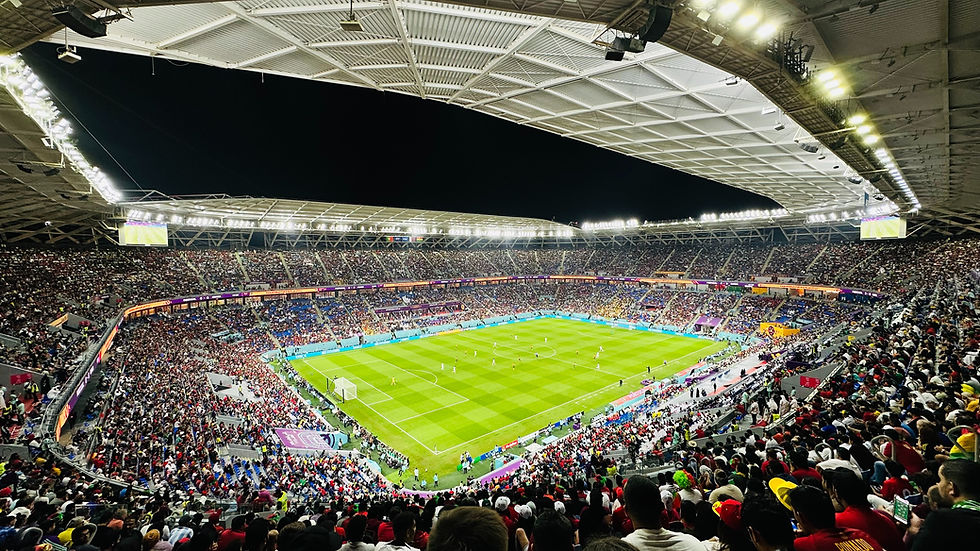
For executives, VIP car service World Cup Final NYC planning is not a matter of reserving a vehicle for a match. It is a question of whether the day can absorb global attention, compressed timing, security procedures, hospitality movements, aircraft schedules, hotel coordination, and principal expectations without transferring that burden onto the executive team. The Final is scheduled for Sunday, July 19, 2026, at New York New Jersey Stadium in East Rutherford.
A World Cup Final near New York creates a rare category of movement: the city remains the center of gravity, while the event sits across the Hudson in a stadium district where access, walking distance, departure sequencing, and post-match traffic can reshape the day. For a principal staying on Central Park South, an executive group departing from Midtown, or a board-level guest arriving through Teterboro Airport, the private transportation question is not “How do we get there?” It is “How do we protect the itinerary when every variable is under pressure?”
This article is written for executives and those who support them: chiefs of staff, executive assistants, advisors, security leads, hospitality contacts, and family-office coordinators. It does not treat the Final as a sightseeing occasion. It treats it as a high-visibility appointment with unusually narrow tolerance for confusion. On this day, transportation is the operating system beneath the experience.
Table of Contents

Why the Final Changes the Transportation Question
Most executive transportation decisions in New York are judged by visible outcomes: the principal arrived on time, the vehicle was appropriate, and the experience felt calm. For the World Cup Final, those standards remain necessary, but they are no longer sufficient. The Final introduces a public-event environment where key decisions happen before the guest enters the vehicle: where the vehicle can stage, which access plan is realistic, how much walking distance is acceptable, how changes will be communicated, and who has authority to adjust the sequence.
The sophisticated mistake is to plan the Final like a premium point-to-point transfer with a longer route. That framing underestimates the stadium district. MetLife Stadium sits in East Rutherford, not Manhattan, and the surrounding event infrastructure will be shaped by tournament operations, hospitality access, parking controls, public transportation flows, pedestrian corridors, and law enforcement direction. A map may suggest proximity. The day itself will test control.
For executives, the exposure is not only lateness. It is a chain reaction. A delayed departure from a private aviation terminal can compress hotel preparation. A late hotel exit can alter the pre-match hospitality window. A poorly defined post-match meeting point can create unnecessary visibility. A vehicle that cannot access the intended area can force last-minute improvisation. None of these failures is dramatic in isolation. Together, they create the kind of friction senior travelers remember.
The Principal Movement Model
For a World Cup Final itinerary, the primary asset is not the vehicle. It is the day. A principal may have a hotel departure, a sponsor reception, a private lunch, a stadium hospitality window, the match itself, a post-match engagement, and an onward departure. The vehicle is one instrument within that structure. The real work is protecting the sequence.
VIP NYC Transfers uses a principal movement lens for high-pressure event planning: origin control, access realism, guest hierarchy, communication discipline, and departure containment. Origin control asks whether the pickup location is truly workable at the planned time. A Midtown hotel entrance may behave differently when diplomats, sponsors, media, and private guests are moving at once. A residence on the Upper East Side may require different staging discipline than a hotel on Fifth Avenue.
Access realism asks what the vehicle can actually do on event day. The most refined plan is not the most optimistic one. It distinguishes confirmed access from assumed access, builds around the most reliable path, and keeps the principal insulated from the operational conversation. Guest hierarchy then determines who receives detailed updates, who receives only essential timing, and who makes decisions if the match, hospitality schedule, or departure plan changes.
Departure containment is the final layer. Many event plans focus heavily on arrival and treat departure as a mirror image. It rarely is. After a Final, thousands of guests move at once, communication becomes harder, and the emotional pace of the day changes. A disciplined post-match plan defines the meeting logic before the event begins. It avoids asking a senior traveler to interpret a stadium map, search for a vehicle, or reconcile conflicting instructions after the match.
Where Executive Teams Misjudge Timing
Executives are accustomed to calendar precision. Their teams often work in fifteen-minute increments, with the assumption that a delayed meeting can be absorbed by a stronger buffer later in the day. The World Cup Final does not reward that logic. The pressure is not linear. A ten-minute delay at the hotel may become a thirty-minute exposure near the stadium. A short hold at a private aviation terminal can eliminate the only calm window before arrival.
The first timing risk is the false comfort of ordinary New York experience. A team may know the route from Manhattan to East Rutherford under normal conditions. That knowledge is useful, but incomplete. Final day introduces event controls, tournament credentials, hospitality timing, road restrictions, intensified demand, and unpredictable pedestrian movement. The distance from Midtown to the stadium is not the planning unit. The planning unit is the controlled movement window.
The second risk is over-reliance on the visible itinerary. A calendar may show “depart hotel,” “arrive stadium,” “hospitality,” and “match.” What it may not show is luggage status, hotel elevator timing, principal readiness, security screening, credential distribution, weather tolerance, phone connectivity, or whether the receiving party at the venue is prepared. Executive teams often lose time in these small transitions because they are not considered transportation issues until they affect the vehicle.
A practical executive standard is to separate fixed times from protected windows. Kickoff is fixed. Hospitality access may be relatively fixed. The principal’s readiness may be variable. Aircraft arrival may be variable. Stadium departure will be heavily variable. The plan should absorb variability around the fixed commitments rather than pretending every segment has the same level of control.
VIP Car Service World Cup Final NYC and the Access Question
For the World Cup Final, access is not a courtesy detail. It is the center of the plan. Executives and their teams should be careful with any proposal that treats stadium access as a simple drop-off instruction. The more controlled the event, the more important it becomes to distinguish between a desired curb, a permitted zone, a parking credential, a hospitality program, and a realistic walking route.
This is especially important for guests accustomed to private aviation or hotel-managed arrivals. A private terminal at Teterboro Airport can feel controlled because the environment is built around discreet movement. A five-star hotel entrance on Central Park South can feel controlled because roles are familiar. A stadium on Final day is different. It is a temporary operating environment governed by event rules, security direction, crowd movement, and credentialed access.
A strong plan should define what is known, what is pending, and what must be verified closer to the date. If a hospitality provider manages a VIP parking pass, the transportation plan should reflect that. If a vehicle must use a designated parking area and the guest must walk, the walking distance should be treated as part of the experience, not an afterthought. If larger vehicles face access limitations, that should be addressed before the executive party is grouped into the wrong vehicle strategy.
Airport Continuity: JFK, LaGuardia, Newark, and Teterboro
World Cup Final planning becomes more delicate when the itinerary touches an airport. Many executive guests will not treat the match as a standalone event. They may arrive the same day, depart after the match, or position through New York for surrounding meetings. JFK Airport, LaGuardia Airport, Newark Liberty International Airport, and Teterboro Airport each carry a different operational profile, and each interacts differently with stadium timing.
Teterboro may appear to be the cleanest airport for private aviation, and in many executive contexts it is. Yet the advantage of proximity does not remove the need for coordination. Aircraft timing, luggage handling, passenger readiness, terminal selection, and the receiving chauffeur’s positioning all matter. A delayed aircraft can pressure the entire stadium arrival plan. A principal who expects direct movement from aircraft to event may still need clear communication about credentialing, guest grouping, and what happens if the access path changes.
Newark Liberty International Airport is geographically closer to East Rutherford than JFK or LaGuardia, but proximity alone should not drive the decision. An executive team considering an outbound flight after the Final should think carefully about post-match departure compression. The challenge may not be the airport distance. It may be leaving the stadium environment, reconnecting with the vehicle, clearing congestion, and preserving enough airport margin without creating visible stress.
JFK and LaGuardia introduce different considerations. They may be more convenient for certain commercial schedules, international movements, or hotel itineraries, but they add cross-city exposure. If the principal is moving from Manhattan to the Final and onward to an airport, the day should be planned as one connected journey, not as separate reservations. The handoff between hotel, stadium, and airport is where executive transportation either protects the calendar or becomes another item the team must manage.

How VIP NYC Transfers Frames a Final-Day Plan
For VIP NYC Transfers, a World Cup Final plan begins with the itinerary, not the vehicle. The first questions are deliberately practical: where is the principal starting, who is traveling together, what access credentials exist, whether hospitality is involved, what time sensitivity surrounds the arrival, and whether there is an airport, hotel, residence, or secondary engagement before or after the match. Only then does the vehicle conversation become useful.
The planning should identify the primary movement and the supporting movements. A principal may require one vehicle, while advisors, family members, or security contacts require another. A larger group may need a Mercedes-Benz Sprinter Executive, while a principal may prefer a Mercedes-Maybach S-Class or a Cadillac Escalade ESV depending on party size, luggage, and the desired posture of the arrival. Vehicle fit should serve the operating model; it should not force the itinerary into a less controlled shape.
The second layer is communication. The designated contact should be clear. The chauffeur assignment and contact flow should be controlled. Timing should be expressed in terms of readiness and departure discipline, not just requested pickup time. If the service includes standby, the expectations should be defined. If it is a point-to-point structure, the departure logic should still be discussed, because the Final is not a normal point-to-point environment.
The final layer is restraint. Not every possibility needs to be placed in front of the principal. Not every operational concern needs to become a long email thread. The value of a concierge transportation partner is to surface the decisions that matter, reduce the decisions that do not, and protect the people around the executive from preventable ambiguity. For a Final in New York, that restraint is not aesthetic. It is essential.
Comparison Matrix
Executive Planning Criterion | VIP NYC Transfers Reference Standard | Standard Premium Transportation Approach | Risk If Mismanaged |
Itinerary framing | Begins with principal movement, access, timing exposure, and communication flow | Begins with vehicle type and pickup time | The day is planned too narrowly |
Stadium access | Separates confirmed credentials, parking realities, walking distance, and fallback logic | Assumes the desired drop-off is available | Last-minute repositioning or guest exposure |
Executive communication | Uses a designated contact and keeps operational noise away from the principal | Sends updates broadly or reactively | Senior traveler becomes involved in logistics |
Airport continuity | Connects airport, hotel, stadium, and departure timing into one operating plan | Treats each movement as separate | Missed buffers and compressed transitions |
Vehicle strategy | Matches vehicle to party size, luggage, hierarchy, and access limitations | Selects based mainly on preference | Wrong vehicle for the actual event environment |
Post-match departure | Defines meeting logic and expectations before arrival | Treats departure as a simple return | Confusion during the most congested period |
Discretion | Reduces visible waiting, searching, and on-site decision-making | Focuses mainly on privacy inside the vehicle | Avoidable public friction |
Advisor burden | Surfaces only the decisions that matter | Leaves executive staff to reconcile details | Coordination burden shifts back to the client team |

VIP Car Service World Cup Final NYC
For executives attending the FIFA World Cup Final in New York, VIP NYC Transfers can coordinate a private transportation plan around the full itinerary: hotel, residence, airport, hospitality timing, stadium access, and post-match departure expectations.
To begin, share the principal’s starting point, number of guests, vehicle preference, access or hospitality details, and any airport or post-match requirements. The coordination can then be refined with discretion as event-day instructions mature.
FAQ Section
What makes VIP car service World Cup Final NYC planning different from a standard event transfer?
The Final creates unusually high pressure around timing, access, parking, walking distance, and post-match departure. For executives, the focus should be itinerary protection rather than simply selecting a vehicle.
Should executives plan transportation from Manhattan to MetLife Stadium as a point-to-point service?
For the Final, a point-to-point structure may be too narrow unless departure expectations, access credentials, walking distance, and post-match meeting logic are clearly understood. Many executive itineraries require broader coordination.
How early should an executive team begin coordinating private transportation for the World Cup Final?
Coordination should begin once the core itinerary is known, especially if hospitality access, airport timing, multiple guests, or standby expectations are involved. Details can be refined as event instructions become clearer.
Can VIP NYC Transfers coordinate airport continuity for the Final?
Yes. VIP NYC Transfers can structure private transportation around JFK Airport, LaGuardia Airport, Newark Liberty International Airport, Teterboro Airport, hotels, residences, and stadium movements, based on the specific itinerary.
What information is most important to provide before requesting coordination?
The most useful details are pickup location, number of guests, luggage profile, vehicle preference, hospitality or parking credentials, desired arrival time, airport details, and post-match expectations.
Is a larger vehicle always better for an executive group?
Not necessarily. Larger vehicles may be appropriate for group cohesion, but access limitations, guest hierarchy, luggage, and arrival posture should guide the recommendation.
Why is post-match planning especially important for executives?
After the Final, large numbers of guests move at once and communication can become harder. A clear post-match plan reduces visible waiting, confusion, and unnecessary involvement from the principal.
Does VIP NYC Transfers guarantee specific stadium access?
Access depends on event rules, credentials, parking permissions, and official instructions. VIP NYC Transfers can help plan around known access conditions and refine the approach as details become available.