Private Transportation in Manhattan for the US Open: The Executive Release Window

Updated: Sep 23
Private transportation in Manhattan for the US Open should be planned around the moment an executive becomes operationally free to leave Manhattan—not around a theoretical travel time to Queens. A meeting may end at a fixed hour, yet the principal may still need to close a conversation, return to a hotel suite, collect a guest, change attire, or complete a call before departure. When the schedule is compressed, those final Manhattan minutes determine whether the entire evening begins with composure or visible catch-up.
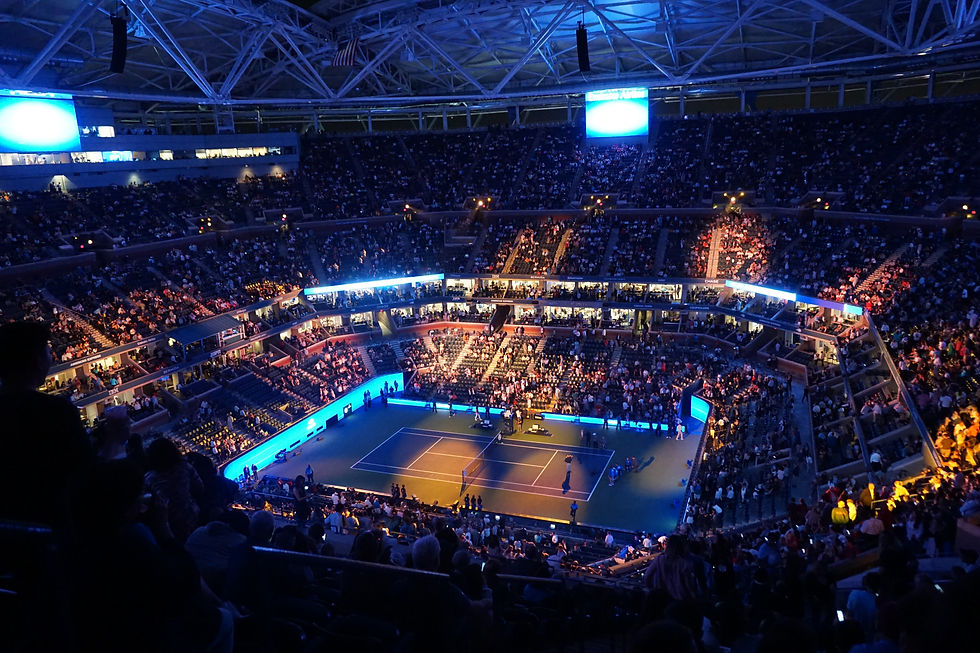
The US Open is held at the USTA Billie Jean King National Tennis Center in Flushing Meadows, while many executive itineraries originate in Midtown, Wall Street, Hudson Yards, Central Park South, the Upper East Side, SoHo, or Tribeca. The operational question is therefore not simply how long the journey may take, but when the Manhattan portion of the day must be considered complete. A departure plan that ignores that threshold transfers uncertainty from the calendar into the vehicle, the venue approach, and the hosted experience.
For discovery-stage readers, this distinction is important before vehicle selection or a final pickup time is discussed. The strongest early planning decision is to define a protected release window: a disciplined interval in which the principal, guests, assistant, chauffeur, and venue objective become aligned. This article examines that narrow decision because it is where Manhattan complexity can either be absorbed quietly or carried all the way to the tennis grounds.
Table of Contents
Why Private Transportation in Manhattan for the US Open Begins Before Pickup
The Manhattan Release Window: A Decision Model for Executive Departures
The Executive Assistant’s Real Burden Is Decision Compression
Venue Timing Should Be Set by Purpose, Not the Posted Session
What Sophisticated Buyers Still Misjudge About the Manhattan-to-Queens Transition
How VIP NYC Transfers Applies the Release Window Without Making the Evening Feel Managed
Private Transportation in Manhattan for the US Open: The Executive Release Window

Why Private Transportation in Manhattan for the US Open Begins Before Pickup
An address and a requested departure time create the appearance of clarity. In practice, an executive may leave from an office tower with controlled elevator access, a hotel with a congested entrance, a residence where several guests are gathering, or a private club where the conclusion of a conversation cannot be timed precisely. The pickup point is only the visible location; the release condition is the true beginning of the assignment. Until that condition is understood, the itinerary remains more fragile than it appears.
A release condition identifies what must be true before the principal can depart without carrying unfinished logistics into the next movement. It may require that all guests are present, credentials are accounted for, personal items are loaded, a final call is complete, or the host has been given a private moment to transition from business to hospitality. The objective is not to make the departure ceremonial, but to prevent small Manhattan delays from becoming public venue pressure.
This is particularly relevant when the executive is hosting. A guest waiting in the lobby while the principal remains upstairs creates a different tone than a chauffeur positioned discreetly while the concierge team coordinates readiness through one designated contact. Executive hospitality is protected when the guest experiences confidence without seeing the internal adjustments that produced it.
The Manhattan Release Window: A Decision Model for Executive Departures
VIP NYC Transfers frames this planning question through the Manhattan Release Window, a four-part model built around calendar closure, origin friction, guest convergence, and venue intent. The model separates the requested departure time from the earliest responsible departure time. That distinction gives an executive assistant or chief of staff a more realistic basis for coordinating the day without presenting the principal with an inflated buffer or an unnecessarily rigid schedule.
Calendar closure asks whether the preceding commitment can truly end when the calendar says it will. Origin friction considers the practical demands of the building, hotel, residence, or meeting location. Guest convergence identifies whether travelers are already together or arriving from separate points. Venue intent clarifies whether the group is attending only for the match, joining hospitality beforehand, meeting clients inside, or preserving time for a private conversation before entering. Each layer changes how much margin should exist before Manhattan releases the group.
The model is deliberately selective. It does not attempt to predict every street condition or impose one formula on every itinerary. Instead, it identifies where uncertainty is concentrated and assigns responsibility before departure. A disciplined release window creates calm because it converts vague concern into a small number of decisions that can be confirmed in advance.
Not Every Manhattan Origin Carries the Same Executive Risk
A Midtown hotel may offer proximity to the principal but introduce lobby congestion, competing arrivals, luggage activity, or limited curb access. A Wall Street office may provide a controlled interior environment while creating an inflexible elevator and security sequence. An Upper East Side residence may feel private, yet require coordination among guests arriving separately. Manhattan origin risk is shaped less by neighborhood prestige than by how predictably the group can become departure-ready.
Hudson Yards and Midtown West can place an executive near late-afternoon business commitments, but the end of the meeting may remain the least reliable part of the schedule. Fifth Avenue or Madison Avenue appointments may involve a spouse, client, advisor, or shopping stop joining the itinerary at different moments. SoHo and Tribeca can introduce narrow frontage, active pedestrian movement, and venues where guests prefer not to wait visibly. The same requested time can require a different operational posture depending on the building and the people converging there.
Sophisticated planning therefore distinguishes between a location that is geographically convenient and one that is operationally ready. The chauffeur may be positioned, yet the group may not be consolidated. The principal may be ready, yet the hosted guest may still be in transit. Readiness must be judged at group level, not only at vehicle level.
The Executive Assistant’s Real Burden Is Decision Compression
The executive assistant often receives the assignment in fragments: ticket information from one source, hospitality details from another, guest preferences through the principal, and a broad timing request from the calendar. The burden is not the volume of information alone. The burden is that several small decisions become urgent at the same moment if they are not resolved before the departure window opens.
A restrained coordination structure should reduce that burden rather than add another communication stream. One person should have authority to confirm readiness, one channel should carry material changes, and the principal should be protected from operational questions unless direct involvement is necessary. The concierge transportation team should understand the difference between useful visibility and excessive reporting. The right communication standard gives the assistant control without requiring constant supervision.
Before the day, the executive office should be able to answer a concise set of questions: Is the principal leaving directly from the final commitment? Are all guests expected at the same origin? Is hospitality access earlier than the match session? Can the group separate on return? Does any traveler have a fixed airport or private aviation movement afterward? These answers define the operating range more effectively than repeated day-of messages.
Venue Timing Should Be Set by Purpose, Not the Posted Session
The posted tennis session is an important reference, but it is not necessarily the executive arrival objective. A principal joining a suite, meeting a client, or entering a hospitality environment may need to arrive well before the first point. Another guest may prefer a later arrival that minimizes time on the grounds. The correct Manhattan departure window is determined by the purpose of attendance, not by the event time in isolation.
This distinction protects the tone of the evening. Arriving too close to a hospitality commitment can make the host appear rushed even when the match itself has not begun. Leaving Manhattan excessively early can also be counterproductive if it extends the day, reduces privacy, or places the group at the venue before the experience is ready for them. Precision is not the largest possible buffer; it is the margin appropriate to the principal’s objective.
The venue approach should therefore be discussed in terms of thresholds: desired arrival at the grounds, time required for entry and internal movement, hospitality expectations, and the latest acceptable point at which the executive should be visible to guests. Working backward from the social obligation produces a more accurate departure decision than working forward from a map estimate.

What Sophisticated Buyers Still Misjudge About the Manhattan-to-Queens Transition
The first misjudgment is treating Manhattan delay as a traffic problem. Often, the decisive delay occurs indoors: a meeting extends, a guest is not ready, a hotel departure takes longer than expected, or credentials remain with another person. Street movement may be uncertain, but internal readiness is frequently the variable that can be controlled. A serious plan addresses both rather than discussing only the route.
The second misjudgment is assuming that a late release can be recovered through urgency. An executive should not be asked to absorb the consequences of a compressed departure through rushed boarding, repeated calls, aggressive updates, or visible concern in front of guests. Once the release window has been missed, the priority should shift from recovering minutes to protecting composure and resetting expectations intelligently.
The third misjudgment is reserving attention for the principal while overlooking the people who enable the departure. Assistants, security personnel, advisors, hotel teams, and hosted guests may each hold information or items required for the group to move. The transition succeeds when the full departure system is ready, not merely when the principal reaches the curb.
How VIP NYC Transfers Applies the Release Window Without Making the Evening Feel Managed
The purpose of the model is not to burden an executive itinerary with procedure. It is to make the procedure disappear from the guest experience. VIP NYC Transfers begins by understanding the Manhattan origin, the principal’s preceding commitment, the guest structure, the venue objective, and the continuation after the match. The coordination remains proportionate: enough detail to protect the evening, without turning a personal or client-facing engagement into an operational exercise.
Vehicle selection follows that context. A principal traveling privately, a small hosted group, and an executive team moving together may require different cabin profiles and communication patterns. The relevant decision is not simply capacity. It is whether the chosen arrangement supports consolidation at the origin, privacy in transition, and the expected continuation after the session. The vehicle should support the release plan rather than define it.
For the executive office, the practical result is a clearer handoff. The assistant can provide the itinerary, identify the decision-maker, establish the protected departure window, and allow the concierge team to manage positioning and material updates with restraint. A well-coordinated Manhattan departure should feel uneventful to the principal because the judgment has already been exercised elsewhere.
Comparison Matrix
Manhattan departure variable | VIP NYC Transfers reference standard | Address-and-time-only approach | Executive consequence |
Calendar closure | Confirms whether the preceding commitment can realistically release the principal | Assumes the calendar end time is the departure time | The schedule may become compressed before the vehicle moves |
Origin readiness | Considers building access, elevators, hotel frontage, residence coordination, and guest gathering | Records only the street address | Indoor and curbside variables remain unresolved |
Guest convergence | Establishes where each traveler joins and who confirms group readiness | Assumes all travelers will appear at the requested time | The principal or host may absorb coordination in front of guests |
Venue objective | Works backward from hospitality, client, and entry expectations | Uses the posted session as the only timing reference | The group may arrive technically on time but socially late |
Communication control | Uses one decision-maker and restrained material updates | Relies on multiple calls and messages as conditions change | The executive assistant remains operationally exposed |
Missed release window | Protects composure, resets expectations, and adjusts the plan calmly | Attempts to recover every minute through urgency | Pressure becomes visible to the principal and hosted guests |
Vehicle role | Selects the arrangement after the release conditions and group structure are understood | Treats the vehicle as the primary decision | Capacity may be correct while the operating model remains weak |

Private Transportation in Manhattan for the US Open: The Executive Release Window
Executive US Open attendance should not begin with a generic estimate between Manhattan and Queens. It should begin with an understanding of when the principal, guests, preceding commitments, and venue purpose can be brought into alignment.
VIP NYC Transfers can review the complete sequence and coordinate a protected Manhattan departure with discretion, proportionate communication, and calm operational judgment. To request coordination, the executive office may share the session, Manhattan origin, guest structure, hospitality timing, and any fixed commitments before or after the event.
FAQ Section
What is private transportation in Manhattan for the US Open meant to protect?
At the executive level, it should protect the transition from the final Manhattan commitment into the venue experience. That includes principal readiness, guest convergence, hospitality timing, controlled communication, and a composed arrival.
When should an executive leave Manhattan for a US Open session?
The departure should be calculated backward from the intended venue arrival, hospitality commitment, entry requirements, and internal movement—not only from the posted session time. The preceding Manhattan commitment and origin conditions should also shape the protected release window.
Why is a protected release window more useful than one fixed pickup time?
A fixed pickup time assumes every preceding variable will resolve exactly as planned. A protected release window recognizes that meetings, hotel departures, guest arrivals, and credentials may require controlled flexibility while still preserving the venue objective.
What should an executive assistant confirm before the chauffeur arrives?
The assistant should confirm the actual origin, principal readiness requirements, guest count, whether travelers are converging from separate locations, hospitality timing, the designated decision-maker, and any fixed obligation after the session.
Does the Manhattan neighborhood change how US Open transportation should be planned?
Yes. The relevant difference is not prestige but operational readiness. Office towers, hotels, residences, private clubs, and dining locations create different elevator, security, frontage, guest-gathering, and communication conditions.
Should hospitality time or match time determine the Manhattan departure?
Hospitality time should govern when it is the earlier and more important obligation. The posted match time remains relevant, but executive attendance may require a composed arrival for a suite, client meeting, or hosted engagement before play begins.
How does VIP NYC Transfers coordinate changes without involving the principal unnecessarily?
VIP NYC Transfers establishes a clear decision-maker, a restrained communication path, and the material conditions that may require adjustment. The objective is to keep the executive office informed while shielding the principal and guests from routine operational discussion.