Executive Roadshow Transportation NYC

Updated: 6 days ago
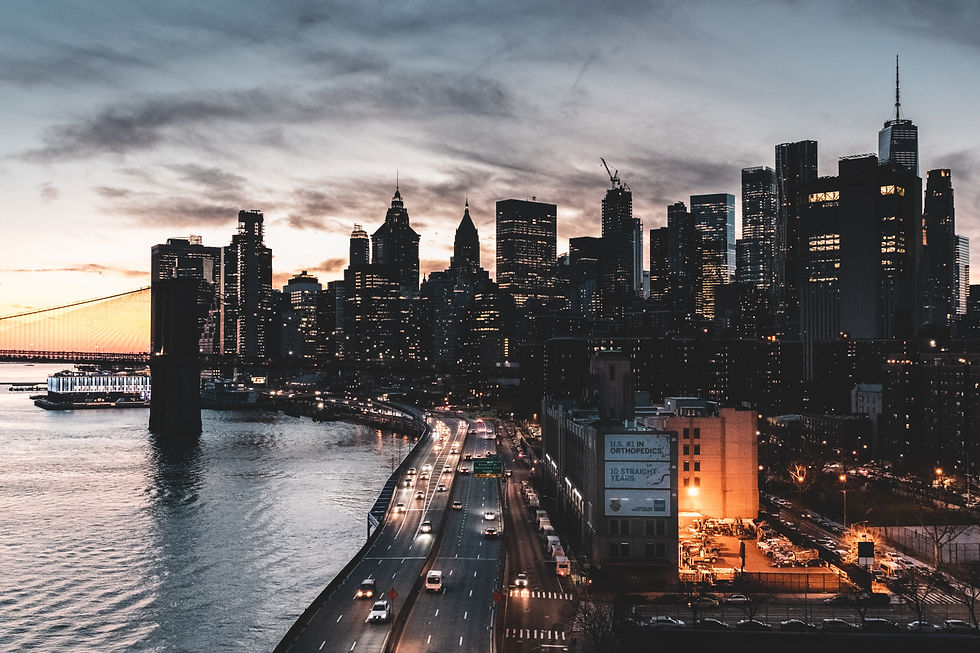
Executive roadshow transportation NYC planning is often treated as a timing exercise, but for senior leaders the more valuable asset is attention. A principal moving from investor meeting to advisory session to private lunch in Manhattan is not simply crossing the city. They are carrying a sequence of decisions, conversations, impressions, and confidential context that must remain intact from the first arrival to the final departure.
The visible itinerary may list Midtown, Wall Street, Hudson Yards, Madison Avenue, or a major hotel on Central Park South. The real itinerary is more delicate. It includes the final five minutes before a meeting, the private call between stops, the quiet reset after a difficult discussion, and the ability of the executive team to stay aligned without making transportation another agenda item.
For a discovery-stage reader, the question is not yet which vehicle to reserve. It is whether the transportation plan is strong enough to protect the roadshow’s business purpose. In New York City, a roadshow can be compressed into a single day, split across multiple boroughs, or attached to an arrival at JFK Airport, LaGuardia Airport, Newark Liberty International Airport, or a private aviation terminal at Teterboro. Each format introduces different exposure. The work is not to move faster. The work is to remove avoidable friction before it reaches the principal.
Table of Contents

Why Roadshows Are an Attention Risk
A roadshow creates unusual pressure because the executive is expected to perform consistently across separate rooms. The first meeting may require authority, the second diplomacy, the third technical precision, and the fourth a more personal style of influence. Between those rooms, the leader has very little time to recover, recalibrate, or absorb new guidance from counsel, bankers, investors, or internal advisors.
That is why roadshow transportation should be evaluated as an attention-protection layer. The chauffeur is not part of the meeting, but the movement between meetings can either preserve composure or erode it. A late curb arrival, unclear building instruction, poorly placed vehicle, or repeated question to the assistant can interrupt the rhythm of the day before the principal ever enters the next room.
Sophisticated executive teams often understand the importance of privacy and punctuality. What they can still underestimate is cognitive leakage. Each small uncertainty requires someone to decide, confirm, clarify, redirect, or reassure. On a six-stop Manhattan roadshow, those interruptions accumulate quickly. The executive should not be solving for staging, lobby access, or whether a meeting running over by twelve minutes has compromised the next arrival.
The Principal Movement Map
VIP NYC Transfers approaches roadshow planning through what can be called the Principal Movement Map: a four-layer view of the day that separates the executive’s movement from the surrounding coordination burden. The first layer is the principal path. This includes the exact sequence of locations, expected arrival posture, required privacy, luggage or materials, and any moments that require quiet rather than conversation.
The second layer is the advisory path. Roadshows rarely involve one person alone. An executive may be accompanied by a chief of staff, banker, legal advisor, investor relations lead, communications advisor, assistant, or security-aware representative. Even when they do not travel in the same vehicle, their timing affects the principal’s day. A plan that ignores the advisory layer can create misalignment at the very moment the team needs to be composed.
The third layer is the venue path. New York buildings do not behave uniformly. A Fifth Avenue office tower, a private club on the Upper East Side, a hotel entrance in Midtown, a conference space near Hudson Yards, and a financial institution downtown may each have different approach patterns, lobby rules, curb limitations, security desks, loading areas, and preferred arrival points. The address alone is not the plan.
The fourth layer is the contingency path. What happens if a meeting runs long, the principal needs a confidential call before the next stop, the advisory team splits, or the first meeting changes from Midtown to Tribeca? The value of the map is that it makes these conditions visible before the day begins, allowing the transportation plan to absorb change without exposing the executive to disorder.
Executive Roadshow Transportation NYC Must Protect Preparation Time
The defining feature of executive roadshow transportation NYC service is not distance coverage. It is the protection of preparation time. In Manhattan, two meetings may be separated by less than two miles, yet the usable time between them can be only a few minutes once elevator travel, lobby movement, security check-in, curb access, and meeting overruns are considered.
For a principal, those few minutes often matter more than the meeting itself. They may need to review a term, receive a briefing, consider a sensitive question, or make a call that should not occur in a hotel lobby or public corridor. A quiet, properly staged vehicle becomes a temporary private office because it protects the transition into the boardroom.
Planning should therefore begin with meeting significance, not geography. Which stop carries the greatest reputational exposure? Which meeting requires the principal to arrive unhurried? Which transition needs privacy for an advisory call? Which location is most likely to create access friction? Once those questions are answered, the transportation plan can be built around decision quality rather than a basic sequence of addresses.
Where NYC Roadshows Break Down Quietly
NYC roadshows often fail quietly. The visible failure is a late arrival, but the more common issue is a day that becomes progressively less controlled. The assistant begins with a clean schedule, then spends the next several hours relaying updates, checking vehicle location, confirming lobby instructions, adjusting lunch timing, and calming uncertainty that should have been contained by the plan.
Another quiet failure is over-compression. Roadshow schedules are frequently built by meeting value rather than movement reality. A team may accept a calendar that looks efficient on paper but leaves no room for building exits, security desks, cross-town variability, private calls, or the natural delay that occurs when important conversations refuse to end at the exact scheduled minute.
A third failure is fragmented responsibility. The airport movement is handled by one party, the Manhattan day by another, and the evening departure by someone else. Each component may be acceptable in isolation, yet the principal experiences the day as one continuous obligation. When responsibility is fragmented, context disappears at the boundaries.
The final failure is excessive visibility. A roadshow can involve investors, media-sensitive topics, confidential transactions, or leadership transitions. A vehicle staged poorly, a chauffeur without the right briefing, or a public curb wait can create unnecessary exposure. Discretion is also about how the arrival appears to others, how long the principal is visible, and how little explanation is required in public spaces.
The Assistant and Advisor Burden Behind the Itinerary
The executive assistant, chief of staff, or advisor often carries the invisible weight of the roadshow. They are expected to protect the principal’s time, maintain the calendar, coordinate with hosts, manage changes, communicate with internal stakeholders, and still remain calm enough to support the leader’s judgment. Transportation should reduce that burden, not add another channel requiring constant supervision.
A strong roadshow transportation plan gives the coordinator fewer questions to answer during the day. Pickup locations, timing buffers, passenger names, luggage considerations, preferred communication style, phone numbers, and venue-specific notes should be clarified in advance. When the day changes, the coordinator should be able to communicate once and trust that the adjustment will be handled with precision.
For advisory teams, the same principle applies. A banker preparing the principal for a Midtown meeting, a legal advisor managing sensitive context before a Wall Street discussion, or an investor relations lead preparing the next conversation needs movement that supports the briefing cadence. Private transportation for a roadshow should respect the fact that the work continues between meetings.
Vehicle Continuity and Chauffeur Briefing
Vehicle continuity is not merely a comfort preference during a roadshow. It is an information advantage. When the same chauffeur and vehicle remain assigned for the day, the operating context builds rather than resets. The chauffeur understands the rhythm of the principal, the communication style of the coordinator, the sensitivity of certain stops, and the practical realities of where the executive is likely to emerge.
That continuity allows small decisions to become cleaner. The vehicle can be staged with the next transition in mind. The chauffeur can anticipate whether the principal prefers quiet after a meeting or needs immediate movement. The coordinator does not have to reintroduce the itinerary to a new party at every stop. In a compressed NYC day, that reduction in repeated explanation is a material benefit.
Chauffeur briefing is equally important. A polished vehicle without a properly briefed chauffeur is incomplete. The chauffeur should understand the sequence, the principal’s name and preferences as appropriate, the primary coordinator, the expected communication channel, the timing sensitivity of each stop, and any privacy considerations. The best roadshow transportation is often remembered for what did not happen: no confusion at the entrance, no unnecessary call to the principal, no public delay, and no sense that the team was rebuilding the plan throughout the day.

How VIP NYC Transfers Approaches Roadshow Coordination
VIP NYC Transfers supports roadshow transportation as a concierge coordination assignment, not as a collection of isolated segments. The purpose is to understand the shape of the executive day before assigning the operational structure around it. That may include airport arrival coordination, hourly chauffeur services, full-day executive support, multi-stop Manhattan movement, hotel coordination, private dinner transitions, or a departure following the final meeting.
For discovery-stage executives and their teams, the first conversation should focus on the itinerary’s pressure points. Where is the principal arriving from? Which meeting is most sensitive? How many travelers are moving together? Will advisors separate at any point? Are there luggage, materials, or privacy considerations? Is the day concentrated in Midtown, split between Wall Street and the Upper East Side, or extended into SoHo, Tribeca, or a private residence?
From there, the transportation plan can be shaped around the real risk profile. A light schedule may require discreet hourly service with carefully planned buffers. A dense investor day may require a full-day structure with continuity, standby, and active coordination. A same-day arrival from Teterboro or a commercial airport may require particular attention to the first meeting, because the tone of the entire day is often set before the executive reaches the first room.
The appropriate standard is not theatrical luxury. It is calm control. VIP NYC Transfers is most relevant when the executive team wants fewer visible decisions, fewer repeated explanations, and a transportation partner that understands how much of the roadshow happens in the spaces between meetings. For principals, the benefit is composure. For assistants and advisors, it is operational relief. For the organization hosting or sending the executive, it is the quiet protection of a business-critical day.
Comparison Matrix
Roadshow decision criterion | VIP NYC Transfers reference standard | Standard hourly booking | Separate airport and city providers | Internal ad hoc coordination |
Principal attention protection | Planned around preparation rhythm, privacy, and composure between meetings | Usually focused on vehicle availability and time block | Context may reset between each segment | Often depends on assistant intervention throughout the day |
Advisory-team alignment | Coordinator, chauffeur, and itinerary notes remain connected | Limited support beyond scheduled timing | Advisors may need to repeat details across parties | High coordination burden on internal staff |
Venue-specific planning | Building access, curb positioning, and arrival posture considered in advance | Often address-based rather than venue-aware | Venue notes may not transfer cleanly | Managed reactively as issues appear |
Schedule compression handling | Designed with buffers, standby logic, and calm adjustment | Changes may be possible but require active management | Each change can affect a separate party | Internal team absorbs the disruption |
Confidentiality-sensitive movement | Discretion considered across communication, staging, and public visibility | Privacy depends heavily on individual execution | Inconsistent standards across handoffs | Higher risk of public confusion or exposure |
Airport-to-roadshow continuity | Arrival can be integrated into the executive day | Airport movement may be treated separately | Context frequently breaks after airport arrival | Assistant must connect each stage manually |
Best fit | High-stakes NYC roadshows involving principals, advisors, and compressed schedules | Simple local movement with limited sensitivity | Low-complexity itineraries with clear handoffs | Informal schedules with low reputational exposure |
Executive Roadshow Transportation NYC
To request coordination for an executive roadshow in NYC, share the principal itinerary, meeting sequence, arrival and departure details, passenger count, and any privacy considerations. VIP NYC Transfers can review the movement profile and prepare a private transportation plan shaped around timing discipline, discretion, and calm execution.
FAQ Section
What makes executive roadshow transportation NYC different from standard executive transportation?
Executive roadshow transportation NYC requires more than punctual movement between addresses. It must protect preparation time, advisory alignment, privacy, arrival posture, and schedule continuity across multiple high-value meetings.
When should a team request hourly or full-day chauffeur services for a roadshow?
Hourly or full-day chauffeur services are usually appropriate when the executive has multiple stops, uncertain meeting durations, private calls between locations, advisor coordination needs, or a schedule that may change during the day.
How early should an executive roadshow itinerary be shared?
The itinerary should be shared as early as practical, especially when it includes multiple Manhattan stops, airport arrivals, private aviation timing, luggage, advisors, or privacy considerations. Early review allows the transportation plan to address pressure points before the day begins.
What information should an assistant or chief of staff provide before a roadshow?
Useful details include passenger names, pickup and drop-off addresses, meeting times, preferred communication channels, luggage or materials, privacy concerns, airport details, venue instructions, and whether advisors or guests may split from the principal.
Can airport arrivals be integrated into a same-day roadshow?
Yes. Airport arrivals from JFK Airport, LaGuardia Airport, Newark Liberty International Airport, or Teterboro can be integrated into a roadshow plan when flight timing, baggage expectations, first-meeting importance, and transfer buffers are considered in advance.
How does VIP NYC Transfers support schedule changes during a roadshow?
VIP NYC Transfers supports schedule changes through concierge coordination, chauffeur briefing, timing adjustment, route review, and clear communication with the designated coordinator so the principal is not drawn into operational details.
What transportation risk do executives often overlook in NYC roadshows?
Executives often overlook the loss of attention between meetings. A transportation plan may look acceptable on paper while failing to protect private calls, advisory briefings, quiet resets, and controlled arrivals throughout the day.


Comments