NYC Airport Transportation for Families: Planning Children and Luggage

NYC airport transportation for families should be planned around the family that actually arrives, not around an abstract passenger count. A principal traveling with children, a spouse or partner, a nanny, grandparents, multiple suitcases, strollers, child seating requirements, and separate hotel arrangements creates a very different airport handoff from a solo traveler with one bag.
For affluent and high-profile families, the first New York movement often carries more operational weight than it appears to. Long-haul fatigue, baggage claim, customs, terminal congestion, children reaching the end of their patience, and an assistant coordinating from another location can all converge at the same moment. The objective is not to make the arrival elaborate. It is to make it calm.
This guide introduces the Family Arrival Load Model: people, equipment, release, destination readiness, and communication. It is designed for parents, family offices, private advisors, nannies, personal assistants, hotel concierges, and travel planners who want the first transition into New York to feel considered rather than improvised.
Table of Contents

NYC Airport Transportation for Families Begins Before Landing
A family airport transfer becomes easier when the important decisions are made before the aircraft reaches New York. The most useful brief includes the flight, airport, terminal when known, passenger count, ages of children, luggage estimate, stroller or mobility equipment, child seat or booster requirements, destination, and the person who should receive operational updates.
That information does more than populate a reservation. It determines vehicle fit, whether one vehicle is sufficient, how much loading time is realistic, whether meet-and-greet is useful, and whether the destination is prepared to receive the family.
For international arrivals, scheduled landing time should never be confused with passenger readiness. Immigration, baggage, customs, restroom stops, and the pace of children can materially change the moment the family is ready for the handoff. For domestic arrivals, baggage claim and terminal layout can create similar variability.
The transportation team should track the aircraft while still allowing the family to move through the terminal at a human pace. Flight data informs positioning. It does not tell a child to walk faster or a bag to appear earlier.
The Family Arrival Load Model
The Family Arrival Load Model uses five questions to structure the first movement.
People: Who is actually traveling in the vehicle? Count adults, children, nannies, relatives, assistants, and any person joining at the airport. Seating should be planned around real occupants rather than an optimistic maximum.
Equipment: What must travel with them? Suitcases, carry-ons, strollers, child seats, sports equipment, medical devices, gifts, and other bulky items can consume space differently. Luggage geometry often matters more than the raw number of bags.
Release: When will the family realistically be ready to leave the terminal? The answer depends on the flight, baggage, customs, terminal process, children, and any assistance required.
Destination readiness: Is the hotel room available? Is the residence staffed? Is a second vehicle meeting them there? Is there a lunch, school visit, medical appointment, or family engagement immediately afterward?
Communication: Who is authorized to make changes? The traveling parent, family office, nanny, hotel concierge, or assistant should not all be issuing separate instructions unless that structure has been deliberately agreed.
When those five elements are aligned, the transfer becomes a controlled handoff rather than a sequence of small surprises.

Passenger Count Is Not Vehicle Fit
One of the most common planning errors in family transportation is choosing a vehicle by seats alone. A vehicle may technically accommodate the passenger count while becoming impractical once luggage, strollers, child seating, and personal items are added.
This is especially relevant after long-haul travel. Families often arrive with more volume than a local day trip would suggest. Winter coats, multiple checked bags, carry-ons, a stroller, children's bags, and shopping or sports equipment can quickly change the usable interior.
The right question is not simply, “How many people?” It is, “What must fit without compromising safe seating, comfort, or the family's ability to enter and exit without reorganizing the vehicle at the curb?”
The decision should be made before service, while there is still time to choose a more appropriate vehicle or, where necessary, structure the movement differently.
For the vehicle-fit framework, see Luggage Capacity for NYC Private Transportation.
Child Seating Requirements Must Be Confirmed in Advance
Families traveling with infants or young children should communicate child seat or booster requirements before the service is confirmed. The ages and needs of the children matter because a generic request for “a car seat” may not provide enough information to plan responsibly.
VIP NYC Transfers can coordinate child seats or boosters upon request, subject to the confirmed service requirements. The family or arranging party should provide the relevant child details and clarify any specific preference or requirement in advance.
This is not an area for last-minute assumption. The operational team needs enough lead time to align the vehicle, seating configuration, and requested equipment. If a family prefers to travel with its own child seat, that should also be communicated because the seat itself becomes part of the luggage and loading plan.
For an assistant or travel advisor, the best practice is to treat child seating as a core transportation specification, not an optional note added after the vehicle has been assigned.
Meet-and-Greet Versus Curbside Pickup
Meet-and-greet can be valuable for a family arrival, but it should be chosen because it reduces friction rather than because it sounds more formal.
A family arriving with several children, substantial luggage, grandparents, or a first-time visit to New York may benefit from a clearer inside-terminal handoff. The arriving party has one identifiable point of contact and does not need to navigate the final connection while simultaneously managing bags and children.
Curbside pickup can work well when the family is experienced with the airport, has a lighter travel profile, or prefers a direct transition once baggage is collected. Airport rules and terminal operations determine how vehicles can approach and where passengers can be collected, so the plan should reflect the specific airport and service conditions.
The decision should be made around the family's cognitive load. If the traveling parent is likely to be carrying the coordination burden at the same time as the children and luggage, a structured meet-and-greet may remove an unnecessary task.
Flight Tracking Helps, but Traveler Release Is the Real Handoff
Flight tracking is an essential operational input, but it cannot fully predict when a family will be ready to depart the airport. An aircraft may touch down early and then wait for a gate. A family may clear the aircraft quickly but spend additional time at baggage claim. An international arrival may move through immigration at a pace that differs significantly from the flight schedule.
The transportation team should therefore separate aircraft status from traveler release. Aircraft status answers where the flight is in the aviation process. Traveler release answers whether the family has completed the steps required to meet the chauffeur.
This distinction is particularly important when children are involved. A restroom stop, a change of clothes, food, or simply a few minutes to regroup after a long flight is not an operational failure. The service should create enough structure to absorb ordinary human variability without forcing the family into a rushed curbside experience.
For the airport-timing framework, see Flight Tracking for NYC Airport Arrivals.

The Destination Can Create as Much Friction as the Airport
Family transportation planning should continue through the destination threshold. A hotel arrival may involve bell staff, room readiness, multiple rooms, connecting suites, separate reservations, or family members arriving at different times. A private residence may require coordination with household staff, building security, a doorman, or an estate manager. A second home may involve a longer regional journey where the family should be settled for comfort before leaving the airport.
If the family arrives before the hotel can receive them comfortably, the transfer plan should not pretend that the curb solves the problem. The arranging team may need to confirm luggage handling, a temporary destination, lunch, or a suitable pause before room access.
For a family office or private advisor, this is where the transportation provider's broader understanding becomes useful. The provider does not need to manage the hotel. It does need to know enough about the destination condition to avoid delivering a tired family into a new logistical problem.
When One Vehicle Is Not the Best Answer
Keeping a family together often has obvious benefits, but one vehicle should not be treated as an absolute rule. There are situations where a split movement is more practical.
A large luggage load may justify separating baggage support from passenger comfort. A principal may need to leave for a meeting while the rest of the family proceeds to the hotel. Grandparents may prefer a different pace. A nanny and children may move directly to a residence while another adult handles an appointment. Family office staff may also need to receive luggage or coordinate a secondary destination.
The decision should be based on hierarchy and dependency. Who must remain together? Who can travel independently? Which belongings must stay with which people? What would happen if one vehicle were delayed?
Splitting a family without a communication plan can create more complexity than it solves. Splitting intentionally can protect comfort and schedule integrity. The difference is whether the movement is designed before the airport curb becomes the decision-making environment.
Privacy and Discretion Begin With the Communication Chain
Family privacy is not only a matter of tinted glass or quiet chauffeur conduct. It begins with who receives information.
A family office may book the service while a nanny travels with the children. A parent may want updates without being contacted for routine details. A hotel concierge may coordinate the initial arrival but should not receive the remainder of a private itinerary. A household manager may need the estimated arrival time at the residence without needing the family's airport details.
The transportation plan should identify the primary coordinator and determine what information should flow to whom. Passenger names, room details, residential addresses, children's information, and onward plans should be shared only to the extent required for execution.
This is the practical side of discretion: fewer unnecessary handoffs, fewer duplicate messages, and a clear line of authority when something changes.
Arrival Timing Should Protect the Family, Not Rush It
Premium family transportation is not defined by how quickly the vehicle leaves the airport. It is defined by whether the family can transition without avoidable friction.
A tired child may need a few minutes. A parent may need to reorganize carry-ons. A grandparent may walk more slowly. A missing bag may require one adult to remain behind. Those realities should not force the rest of the arrival into confusion.
The chauffeur and concierge team should be prepared around the flight and the expected release process while maintaining appropriate communication. The family should know what to do when ready. The assistant should know whom to contact if the plan changes. The vehicle should be selected with enough space that the loading process does not become a curbside puzzle.
Calm is created through preparation. It cannot be manufactured by rushing once the family has landed.
Airport Choice Changes the Arrival Pattern
JFK Airport, LaGuardia Airport, Newark Liberty International Airport, and the private aviation airports serving the New York region each produce a different family arrival pattern. The correct transportation plan should therefore be airport-specific without overcomplicating the brief.
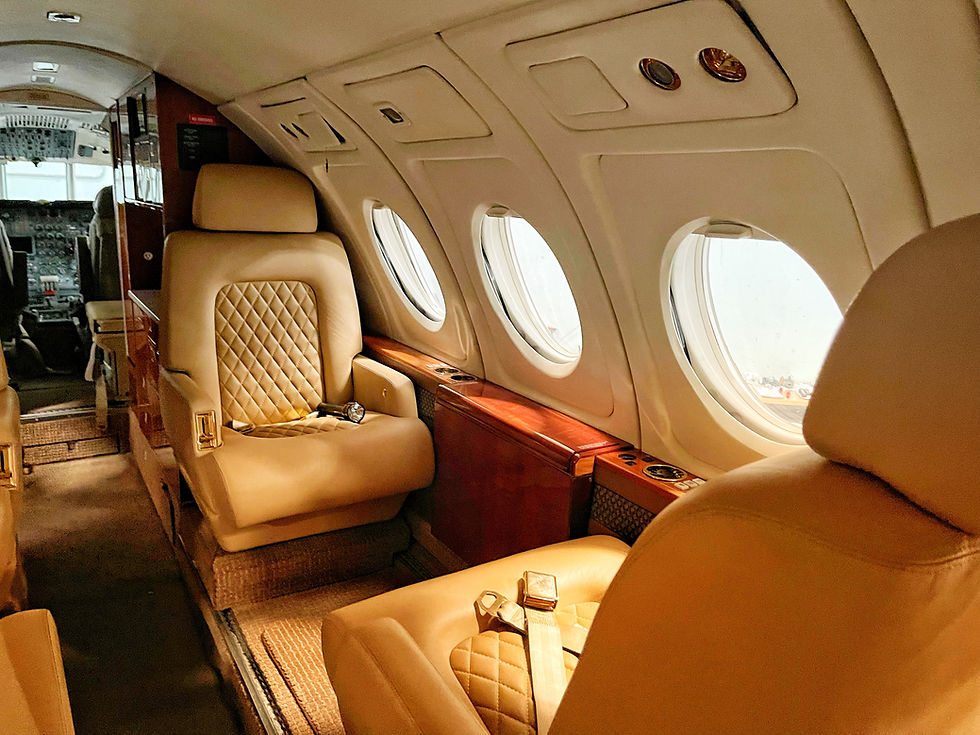
Commercial airports involve terminal, baggage, and pickup procedures. International arrivals add immigration and customs. Private aviation may offer a more contained handoff but still requires clarity about the fixed-base operator, passenger structure, luggage, and onward destination.
The arranging party should provide the actual flight information rather than relying on an airport name and scheduled arrival alone. For private aviation, include the FBO information when known. For commercial travel, airline and flight number allow the transportation team to follow the correct operation.
The airport is not merely the origin. It determines the first set of variables the family must move through before the New York itinerary begins.

A Comparison of Family Airport Transportation Models
The best model depends on the family's complexity and the amount of coordination the arranging party wants to retain.
Model | Advance family planning | Best fit | Primary consideration |
|---|---|---|---|
VIP NYC Transfers — coordinated family arrival | Vehicle fit, child seating, luggage, flight-aware positioning, communication chain | Complex or high-touch family arrivals | Designed around the whole arrival rather than the curb alone |
Standard pre-arranged airport transfer | Core passenger, luggage and destination details | Simpler stable family movements | Additional coordination may be limited |
Hotel-arranged transportation | Usually centered on the hotel arrival | Direct airport-to-hotel movement | Wider family itinerary may sit outside the arrangement |
On-demand premium platform | Established near time of request | Lower-complexity immediate movement | Vehicle, equipment, and chauffeur context may vary |
What a Family Office or Assistant Should Confirm
A concise family arrival brief should answer the questions most likely to change the operating plan.
Confirm the flight and airport. Confirm the number of adults and children. Share children's ages when child seating is requested. Estimate luggage, including strollers and unusually large items. Identify the destination and any fixed commitment afterward. Clarify whether the family stays together or whether anyone may leave separately. Name the primary operational contact. Specify meet-and-greet preference when relevant. Include any mobility consideration or assistance request that affects the handoff.
If several family members are arriving on different flights, do not automatically force them into one pickup simply because the destination is the same. Consider whether waiting makes sense, whether the arrivals are sufficiently close, and how a delay to one flight would affect the others.
The best brief gives the transportation team enough context to protect the family without circulating unnecessary private information.
How This Article Supports the Family Transportation System
This arrival guide is intentionally narrower than our broader family transportation framework. The useful planning sequence is to understand the family, select the right capacity, interpret the airport timing correctly, and build the first handoff around the destination that follows.
For the broader service framework, see Luxury Family Travel NYC.
NYC Airport Transportation for Families Should Feel Considered
The family should not need to become the operations team simply because the aircraft has landed.
The parent should not be comparing vehicle capacities at baggage claim. The nanny should not be negotiating contradictory pickup instructions while supervising children. The assistant should not be calling several people to determine whether luggage will fit. The principal should not be standing at a terminal curb wondering which vehicle has been assigned.
Those are planning questions, and planning questions belong before the service.
For discerning families, the visible luxury of the vehicle matters. But the deeper comfort comes from knowing that the people, equipment, child seating, luggage, timing, destination, and communication chain have already been considered. The arrival becomes quiet because the important decisions were made earlier.
Planning a Family Arrival With VIP NYC Transfers
VIP NYC Transfers provides private family transportation across New York City and the Tri-State region, including airport arrivals, hotel and residence transfers, multi-stop family days, and longer regional journeys.
Our concierge team can coordinate the vehicle around the confirmed passenger and luggage profile, arrange child seats or boosters upon request, monitor flight timing, support meet-and-greet preferences where appropriate, and work through the designated parent, assistant, family office, nanny, concierge, or travel advisor.
For an upcoming arrival, share the itinerary as it currently exists: flight, family composition, children's ages where relevant, luggage and stroller needs, destination, timing, and the preferred point of contact. The plan can then be structured with enough detail to make the first New York movement feel composed without turning a family transfer into an over-engineered production.
By VIP NYC Transfers | New York City
VIP NYC Transfers provides discreet private transportation and concierge transportation coordination for families, executives, diplomats, private clients, assistants, and advisory teams throughout New York City and the Tri-State region. Our editorial work focuses on the operational details that determine whether complex arrivals, departures, multi-stop itineraries, and family movements feel calm in practice.
FAQ
What should families share when booking NYC airport transportation?
Share the flight, airport, passenger count, ages of children when relevant, luggage and stroller needs, requested child seats or boosters, destination, timing, meet-and-greet preference, and the primary operational contact.
Can VIP NYC Transfers coordinate child seats or boosters?
Yes. Child seats or boosters can be coordinated upon request, subject to the confirmed service requirements. The arranging party should share the children's relevant ages and needs in advance so the vehicle and seating plan can be prepared appropriately.
How should families choose the right vehicle for an airport arrival?
Vehicle choice should consider passengers, safe seating, luggage geometry, strollers, child seating, mobility needs, and any people or belongings joining later. Seat count alone is not enough to determine fit.
Is flight tracking enough to determine airport pickup time?
No. Flight tracking shows the aircraft's progress, but the family may still need time for the gate, immigration, baggage, customs, restrooms, and children. The transportation plan should distinguish aircraft arrival from traveler readiness.
When is meet-and-greet useful for a family arrival?
Meet-and-greet can be useful when a family has several children, significant luggage, grandparents, a first-time New York arrival, or simply wants a clearer inside-terminal handoff. The appropriate pickup method also depends on airport procedures and the confirmed service.


Comments