Mercedes-Maybach Executive Transportation NYC

Updated: Oct 6
For a senior executive moving through New York, vehicle selection is not a decorative decision. It determines whether the time between engagements remains usable, whether a sensitive conversation can continue appropriately, and whether the arrival reflects the authority of the principal without attracting unnecessary attention. Mercedes-Maybach executive transportation NYC should therefore be evaluated as a working environment, not as a visible symbol of rank. The question is not whether the vehicle is exceptional. It is whether its particular strengths correspond to the executive’s schedule, companions, luggage, security posture, and arrival context.
That distinction matters because the most prestigious option is not automatically the most operationally intelligent one. A principal traveling alone from a Midtown hotel to a board meeting has different requirements from an executive arriving at Teterboro with an advisor, multiple cases, and a compressed sequence across Manhattan. The correct choice protects executive continuity from door to door; the wrong one introduces small frictions precisely where composure matters most. In a city that compresses meetings, entrances, calls, and decisions into narrow intervals, those frictions can become visible.
This advisory examines the Mercedes-Maybach through a decision-stage lens. It does not catalogue amenities or repeat familiar claims about comfort. Instead, it considers the vehicle as part of an executive operating model: who will occupy it, what must happen inside it, how the principal should arrive, and what the wider itinerary demands. The Maybach earns its place when cabin, choreography, and context are aligned before the day begins.
Table of Contents

The Maybach Decision Is About Executive Continuity
An executive’s day does not pause when a meeting ends. Instructions may need to be given, a call may begin, documents may be reviewed, or the tone for the next engagement may need to be reset. The interval between Wall Street, Hudson Yards, Midtown, and the Upper East Side is often part of the working day, even when no formal meeting appears on the calendar. The first standard for selecting a Mercedes-Maybach is whether it preserves continuity between consequential moments. That means evaluating the cabin in relation to the principal’s actual behavior, rather than treating transportation as empty time.
For some leaders, continuity means quiet separation after a demanding appearance. For others, it means speaking with one trusted advisor before entering the next room. The Maybach is particularly well suited to a principal or tightly defined pair whose work benefits from a composed, sedan-based environment. It is less naturally suited when several members of an executive team must travel together, when equipment volume is substantial, or when repeated entry and exit require a different physical configuration. Executive fit is created by matching the vehicle to the work occurring between stops.
A Four-C Lens for Mercedes-Maybach Executive Transportation NYC
VIP NYC Transfers applies a four-part lens to determine whether a Maybach supports the executive rather than merely accompanying the schedule: Continuity, Conversation, Composition, and Context. Continuity asks what must remain uninterrupted between engagements. Conversation examines who may speak, listen, or require separation. Composition considers the number of occupants, luggage, assistants, and protective personnel. Context addresses the visual and operational character of each arrival. A sound decision requires all four conditions to work together.
The model is deliberately stricter than a preference question. An executive may prefer a Maybach, yet the day may include an airport arrival with extensive luggage, a three-person advisory team, or a venue where a larger vehicle supports access and exit more effectively. Conversely, an SUV may offer surplus capacity but dilute the calm, focused atmosphere desired for a one-principal sequence of investor meetings. Preference remains important, but it should be tested against the day’s practical architecture.
The four questions to resolve are concise:
What work, recovery, or preparation must continue between stops?
Who must share the cabin on every leg, not only the first one?
What luggage, materials, or security requirements accompany the principal?
What arrival tone and entrance conditions apply at each destination?
These questions should be answered at itinerary level rather than once for the entire reservation. A morning arrival from a private aviation terminal and an evening departure from Lincoln Center may sit within the same day but create different occupancy, luggage, and visibility requirements. The vehicle decision is strongest when each leg has been examined without losing continuity across the whole assignment. Where one vehicle cannot serve every condition elegantly, planned fleet composition may be more credible than forcing uniformity.
The Cabin Must Support the Work, Not Compete With It
Executives rarely need more stimulation between engagements. They need an environment that reduces decision noise. In the Maybach, the strategic value of the rear cabin lies in its ability to create a clear psychological boundary between the street and the next obligation. That boundary can support review, reflection, a confidential exchange, or simply a measured reset. The relevant luxury is cognitive space: the ability to arrive with the next decision already organized. This is particularly valuable during a sequence in which the principal must shift rapidly between internal, investor, client, and public-facing roles.
Yet privacy should not be overstated. A refined cabin does not by itself establish a confidentiality protocol, and no responsible provider should imply that it does. The chauffeur’s discretion, the handling of names and itinerary details, communication discipline, pickup positioning, and the conduct of everyone involved remain essential. Sensitive calls may also require judgment about who is present and what can reasonably be discussed. A quiet vehicle supports discretion; disciplined operations create it.
Guest Hierarchy Changes the Correct Vehicle
Vehicle selection becomes more complex when the executive is not traveling alone. A spouse, board chair, investor, legal advisor, chief of staff, or host may alter both cabin dynamics and arrival optics. Two occupants may fit physically while remaining poorly matched operationally if the journey requires separate calls, document review, or a conversation that should not include both parties. Capacity answers how many people can enter; hierarchy determines whether they should travel together.
This is where a single prestigious sedan can become an unforced planning error. Placing the principal, assistant, and external guest together may reduce privacy. Separating the assistant without establishing a linked vehicle may weaken communication at the destination. Assigning the Maybach to a guest while the principal travels elsewhere may be exactly right for hospitality—but only when the hierarchy is intentional and understood. The vehicle plan should make authority and care legible without becoming theatrical.
Arrival Optics Should Be Read, Not Performed
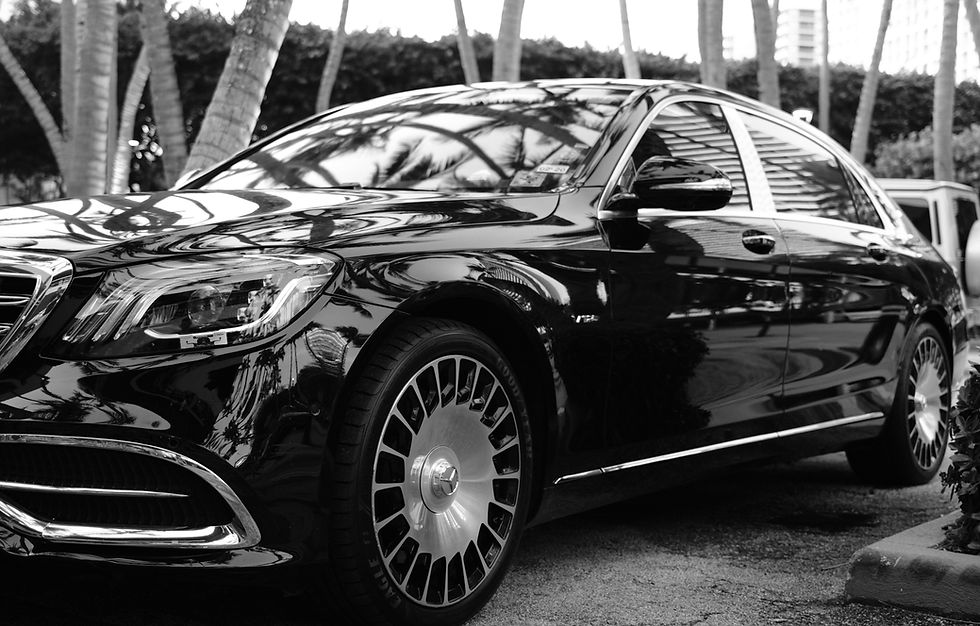
The Maybach carries recognizable presence, and that presence can be appropriate at a private residence, major hotel, corporate venue, cultural institution, or formal dinner. But executive arrival is not a performance by default. At some destinations, a visibly prestigious sedan communicates respect and preparedness. At others, it may create more attention than the principal wants or interact poorly with a congested curb, restricted entrance, or highly public frontage. The correct arrival is the one that supports the engagement’s tone without making the vehicle the event.
New York makes this judgment highly location-specific. A Fifth Avenue entrance, a private garage in Tribeca, a Midtown office tower, and a Wall Street curb do not behave alike. Door position, traffic flow, pedestrian density, doorman coordination, loading restrictions, and the principal’s direction of movement all affect how composed the final moments will feel. The chauffeur may need to balance proximity against exposure or choose a position that protects departure more effectively than the most obvious entrance. Arrival choreography begins with the physical reality of the curb.
Airport and Private Aviation Arrivals Require a Separate Test
An airport arrival introduces variables that a hotel-to-meeting transfer does not: luggage, flight movement, terminal procedures, companion changes, and the traveler’s condition after the flight. JFK Airport, LaGuardia Airport, Newark Liberty International Airport, and Teterboro Airport each create different coordination patterns. The Maybach may be an excellent choice for a principal with controlled luggage and a direct Manhattan program, but the decision should follow an honest assessment of the complete arrival party. Airport suitability is determined by people and possessions at the curb, not by the name on the reservation.
Private aviation can simplify some aspects while making others less predictable. Departure timing may move, tail information can matter, passengers may be ready quickly, and ground coordination must remain responsive without becoming intrusive. A principal may also arrive with an advisor or protection professional who was not expected to share the primary vehicle. In that setting, a Maybach assignment works best when the broader transportation plan can absorb change. The sedan should be part of a flexible arrival structure, not the single point on which every variable depends.
The Chauffeur and Coordination Layer Determine the Result
A Maybach can establish the physical conditions for an exceptional executive journey, but the chauffeur and coordination team determine whether those conditions hold. Route familiarity is only one element. The chauffeur must understand the nature of the assignment, maintain appropriate communication boundaries, position thoughtfully, protect the cabin’s calm, and respond to changes without transferring operational pressure to the principal. The vehicle is the setting; judgment is the service.
Behind the chauffeur, communication architecture matters. The executive assistant, chief of staff, hotel team, aviation contact, venue representative, or household staff may each possess only part of the relevant information. A disciplined provider identifies one operational decision-maker, confirms how updates should flow, and avoids creating parallel conversations that produce conflicting instructions. The principal should not become the switchboard for their own transportation. This is one of the most important distinctions between supplying a vehicle and coordinating an executive movement.
When the Mercedes-Maybach Is—and Is Not—the Right Executive Choice
The Maybach is especially persuasive for a principal traveling alone or with one carefully chosen companion, moving between formal engagements, and valuing a calm rear-cabin environment. It can be well matched to board meetings, investor conversations, private dinners, hotel and residence transitions, and direct airport or private aviation arrivals with appropriate luggage planning. Its best use case is concentrated executive movement: limited occupancy, high consequence, and a clear need for composure.
It is not necessarily the correct answer for a larger working group, extensive baggage, equipment, multiple protective personnel, or a day with frequent passenger changes. In those cases, an Escalade ESV or coordinated multi-vehicle plan may protect the itinerary more convincingly. Choosing another configuration does not reduce the service standard. It demonstrates that the provider understands the difference between visible prestige and operational suitability. The most executive decision is often the one that removes compromise before it can be felt.
For decision-stage buyers, the final evaluation should therefore move beyond model and availability. Ask how the provider interprets the itinerary, manages companion changes, handles updates, selects entrances, plans aviation transitions, and responds when the schedule moves. The quality of those answers reveals whether the Maybach will be integrated into the day or simply delivered to it. A Mercedes-Maybach becomes executive transportation only when every surrounding decision is made to the same standard as the vehicle itself.
Comparison Matrix
Executive condition | VIP NYC Transfers reference standard | Mercedes-Maybach fit | Alternative configuration |
Principal traveling alone between formal engagements | Protect cabin calm, timing, and arrival tone | Excellent | Alternative only if luggage or access conditions require it |
Principal with one trusted advisor | Confirm that shared conversation is appropriate for every leg | Strong | Separate coordinated vehicle if privacy requirements diverge |
Executive team of three or more | Preserve team continuity without compromising principal space | Limited | Escalade ESV or coordinated fleet |
Airport arrival with controlled luggage | Coordinate flight movement, terminal transition, and onward schedule | Strong | Larger vehicle if baggage assumptions are uncertain |
Private aviation arrival with changing passenger composition | Maintain flexibility around timing, companions, and luggage | Conditional | Maybach supported by an additional vehicle |
Formal hotel, residence, or corporate arrival | Match vehicle presence to the entrance and engagement | Excellent | Discreet SUV where curb conditions or visibility dictate |
Protective personnel accompanying the principal | Confirm seating, separation, and operating requirements in advance | Conditional | Escalade ESV or integrated multi-vehicle arrangement |
Multi-stop day with passenger changes | Evaluate composition and privacy separately for each leg | Conditional | Deliberate fleet composition rather than one forced solution |

Mercedes-Maybach Executive Transportation: When the Vehicle Fits the Executive Day in NYC
VIP NYC Transfers coordinates Mercedes-Maybach chauffeur services around the executive’s complete itinerary—not the vehicle request in isolation. Passenger composition, aviation details, luggage, meeting sequence, arrival context, and communication authority are considered before the assignment is finalized.
To request coordination, share the principal’s intended schedule and any known operational requirements with our concierge team. We will assess where the Maybach serves the day convincingly and identify any leg that may benefit from a different or supporting configuration.
FAQ
Is a Mercedes-Maybach suitable for a full day of executive meetings in NYC?
Yes, particularly when the principal travels alone or with one carefully selected companion. The itinerary should still be reviewed for passenger changes, luggage, entrance conditions, and any leg requiring additional capacity.
What should be provided when requesting Mercedes-Maybach executive transportation NYC?
Provide the schedule, passenger composition for each leg, luggage expectations, airport or private aviation details, preferred contact, firm meeting times, and any discretion-sensitive arrival instructions relevant to execution.
Is the Maybach always preferable to an Escalade ESV for a CEO?
No. The Maybach may provide the stronger environment for concentrated principal movement, while an Escalade ESV may be more appropriate for additional occupants, luggage, equipment, or protective personnel. The itinerary should determine the vehicle.
Can an executive assistant receive all operational updates instead of the principal?
Yes. Establishing an authorized operational contact helps protect the principal from unnecessary communication. The preferred contact and communication method should be confirmed before service.
Is the Mercedes-Maybach appropriate for Teterboro Airport transportation?
It can be highly appropriate for a principal or small party with controlled luggage. Private aviation timing, tail information, passenger composition, and any accompanying personnel should be coordinated in advance.
Can a Maybach and an Escalade ESV be coordinated within the same executive itinerary?
Yes. A coordinated configuration may allow the Maybach to serve the principal while the Escalade ESV accommodates executive staff, guests, luggage, or additional requirements. Dispatch and destination information should remain synchronized.
How should confidential calls be handled inside the vehicle?
The passenger composition should be considered before any sensitive conversation. A quiet cabin supports discretion, but confidentiality also depends on communication discipline, chauffeur conduct, and appropriate control of itinerary information.


