How to Arrive at the US Open 2026 with Private Transportation

Updated: 7 days ago
For an executive attending the US Open, arrival is not the same thing as reaching Flushing Meadows. The distinction matters. A vehicle can be geographically close to the USTA Billie Jean King National Tennis Center while the principal is still minutes away from the point that actually matters: the intended entrance, hospitality commitment, suite, meeting point, or guest handoff. That is why US Open 2026 private transportation should be planned around an arrival window, not a map estimate.
The 2026 US Open runs from August 23 through September 13, with the Main Draw beginning on August 30. Official US Open transportation guidance also makes clear that event-day routing and parking conditions can change, including rerouting during Mets conflict dates. For executives, that makes the final approach a live operating environment rather than a static address. The practical question is not, “How long does Manhattan to Queens take?” It is, “What must be true for the principal to arrive at the right moment, in the right state, with no unnecessary decisions left to make?”
This article focuses only on that threshold. It is not a general guide to US Open hospitality, vehicle selection, or the full evening itinerary. It is an arrival briefing for executives, executive assistants, chiefs of staff, advisors, and corporate hosts who need the last phase of the journey to feel intentional rather than improvised.
Table of Contents

The Executive Arrival Is a Readiness Decision
The most useful way to think about a US Open arrival is to separate clock time from readiness. A posted session time is an event fact. An executive arrival time is a management decision. Between those two points sit security, walking distance, credential checks, guest coordination, hospitality timing, and the possibility that a principal wants five quiet minutes before entering a social environment. The right arrival is therefore defined by readiness, not proximity.
That distinction changes the brief. If a principal is expected in a hospitality setting at 6:30 p.m., the transportation plan should not be built backward from the first serve alone. It should be built backward from the moment the principal needs to be socially and operationally present. A chairman arriving with a client, for example, has a different threshold than an executive attending privately with a spouse. The same road may serve both; the arrival standard does not.
For decision-stage buyers, a generic instruction such as “Pick up in Midtown at 5:30” therefore leaves important questions unanswered. Who is being met? Are credentials already distributed? Does another guest join before departure? Is there a hospitality commitment before the session? Who has authority to adjust the schedule? An executive arrival should be briefed as a sequence of conditions, not merely a pickup timestamp.
The objective is not to create complexity around a straightforward evening. It is precisely the opposite: resolve the small dependencies early enough that the principal experiences none of them. That distinction is particularly important at an event where the private transportation environment eventually gives way to pedestrian movement, venue controls, hospitality obligations, and thousands of other attendees operating around similar windows.
The Executive Arrival Window for US Open 2026 Private Transportation
VIP NYC Transfers’ arrival lens can be expressed through five controls: origin readiness, departure authority, approach margin, entry alignment, and communication restraint. Together, these create what we call the Executive Arrival Window. The model is intentionally narrow. It does not attempt to manage the entire evening; it defines the conditions required for the principal to cross from private transportation into the US Open environment without avoidable friction.
Origin readiness asks whether the principal is actually ready to move when the vehicle is positioned. A Fifth Avenue hotel, Hudson Yards office, Wall Street meeting, or Upper East Side residence can each produce different departure behaviors. A meeting may overrun. A guest may still be preparing. A final call may require privacy. A vehicle waiting outside is not the same as an executive being departure-ready. The schedule should reflect the behavior of the origin, not merely its address.
Approach margin is the buffer between ordinary road movement and event-day uncertainty. It should absorb what mapping software cannot fully determine in advance: temporary traffic direction, changing access conditions, pedestrian density, venue instructions, or congestion associated with simultaneous activity around Flushing Meadows. The US Open’s official transportation information specifically identifies event-conflict conditions that can affect routing, demonstrating why the last phase should be treated as variable rather than guaranteed.
Entry alignment connects the vehicle plan with the actual purpose of attendance. A principal meeting another executive inside the grounds, a guest expected at hospitality before play, and a couple attending independently may require different arrival objectives. Communication restraint completes the model. The executive should receive only information that helps the next action. Operational complexity belongs with the people responsible for managing it.
Why Manhattan Departure Time Needs Three Clocks
Manhattan creates a cognitive trap because the distance feels familiar. Midtown to Flushing Meadows appears close enough to encourage ordinary cross-city assumptions. The problem is not generic New York congestion; senior travelers already understand that New York can be demanding. The more specific issue is that the final phase of the journey changes character as the vehicle approaches a major event environment.
A Manhattan departure should therefore distinguish three times: vehicle position time, principal departure time, and venue-ready time. Those moments are frequently collapsed into one. They should not be. Positioning the chauffeur appropriately protects the departure without forcing the principal to conform to the vehicle’s arrival. Principal departure time reflects the actual commitment to move. Venue-ready time describes when the executive should be able to enter the next phase of the evening without being hurried.
This distinction becomes especially useful after a working day. A principal leaving Midtown after meetings may use the private vehicle as a final controlled interval before entering a client-facing environment: one last confidential call, a review of the evening, or simply a period of quiet. The journey into Queens may be the only private transition between business obligations and public hospitality. Compressing the schedule excessively can eliminate that benefit before the executive has even reached the event.
Origins farther downtown, including Wall Street and Tribeca, can create a different behavioral challenge. An appropriately planned departure may feel early when considered solely against match time. Framing the schedule around the intended venue-ready moment is more defensible than adding unexplained padding. Senior travelers generally do not need exaggerated buffers; they need to understand what a specific buffer is protecting.
Airport Arrivals Require a Different Starting Point
For executives arriving through JFK Airport, LaGuardia Airport, Newark Liberty International Airport, or Teterboro Airport, the US Open arrival problem begins earlier because aviation introduces another layer of uncertainty. The wrong instinct is to insert a scheduled flight arrival into the tennis itinerary as though landing time and chauffeur departure time were interchangeable.
Commercial arrivals can involve deplaning, baggage, immigration where applicable, terminal movement, and the traveler’s own pace. Private aviation may reduce some of those steps, yet actual aircraft timing, terminal procedures, luggage, and the principal’s decisions after landing still matter. A scheduled landing is not a chauffeur departure instruction. The transportation plan should respond to the moment the traveler is genuinely ready to leave the airport environment.
This becomes particularly important when an executive intends to attend the US Open on the same day as arrival. Direct airport-to-venue transportation may appear efficient, but the more useful question is whether the principal should proceed directly, stop at a hotel, change, collect another guest, or preserve a short recovery interval first. The transportation decision should follow the human condition of the traveler and the purpose of the evening rather than the apparent efficiency of eliminating an intermediate stop.
LaGuardia may appear especially convenient because both the airport and the National Tennis Center are in Queens, while JFK, Newark Liberty, and Teterboro create different geographic approaches. The operating principle remains constant regardless of origin: determine what needs to happen before the principal is truly venue-ready, then work backward to the chauffeur plan. VIP NYC Transfers already maintains dedicated airport and private aviation transportation services that can be naturally connected to this broader movement when required.

Who Owns the Handoff Matters More Than It Appears
Executives frequently delegate transportation, tickets, hospitality, and guest communication to different people. That division of responsibility is efficient until the arrival depends on information distributed among several stakeholders. One assistant knows the hotel departure. A corporate host controls hospitality timing. Another executive’s assistant manages the guest’s calendar. Someone else holds the credentials. Fragmentation becomes an arrival problem when nobody owns the final transition.
A strong arrival brief resolves this in advance. It identifies one operational contact, a separate principal-facing contact when appropriate, the expected venue-ready time, and a clear path for resolving a material change. The goal is not increased communication. The objective is fewer competing instructions at the precise moment when the executive should be asked to manage nothing.
This is also where discretion becomes practical rather than ceremonial. A principal should not need to stand near the venue reviewing multiple message threads, telephone a host for basic directions, or explain the itinerary to the chauffeur. Discretion at arrival is partly the absence of visible uncertainty. The chauffeur does not need every corporate detail, but the concierge team needs sufficient context to make informed operational decisions.
For a hosted evening, a representative may need to understand approximately when the principal is transitioning from vehicle to venue. For a private evening, fewer parties may appropriately remain involved. Where several senior executives are attending, the question may be whether a common arrival genuinely serves the group or whether differing schedules and hierarchy justify separate movements. Arrival design should reflect who needs to know what—and no more.
Flushing Meadows Is an Operating Environment, Not a Single Curb
The most consequential mistake is treating the USTA Billie Jean King National Tennis Center as though it were a single curbside destination. The venue sits within Flushing Meadows-Corona Park, and reaching the wider complex is not necessarily equivalent to reaching the point from which the guest’s next action begins. Official US Open guidance should therefore be reviewed close to the service date because transportation directions, conflict-day routing, and parking procedures are event-specific.
The 2026 event is also taking place while a multi-year transformation of Arthur Ashe Stadium and the broader tennis center is underway. The USTA has said the work is being phased to avoid interrupting the 2025 and 2026 tournaments. That does not imply a particular transportation restriction, but it reinforces a broader operating principle: current official venue information should take precedence over assumptions formed from a previous year’s experience.
A responsible chauffeur services provider should therefore avoid promising an exact curbside result that depends on venue controls outside its authority. Precision is not pretending uncertainty does not exist; it is defining how uncertainty will be managed. A credible plan distinguishes what is known from what remains subject to event-day instructions and preserves enough margin to adjust without transferring the consequences to the principal.
For the executive, the visible experience should remain simple even when the operating environment is not. The vehicle approaches according to current conditions. The communication path is understood. The next step is clear. Luxury at a major event is not a promise that New York or the venue will behave perfectly. It is the presence of a disciplined plan when external conditions are imperfect.
How Executives Should Evaluate US Open Arrival Coordination
At decision stage, the useful questions are not primarily about amenities. They concern accountability. A chauffeur services provider should be able to explain how the pickup is briefed, how material day-of changes are communicated, how the chauffeur receives updated information, and what happens when the principal’s departure shifts.
The buyer should also test whether the provider understands the difference between a posted event time and the executive’s actual arrival objective. A conversation limited to estimated driving time is incomplete. Questions about origin behavior, hospitality timing, guest composition, contact hierarchy, and venue-ready time demonstrate a more relevant understanding of what the assignment requires.
Vehicle presentation remains important, but it should not dominate the decision. An impeccable vehicle cannot correct a confused handoff, unclear entry objective, or badly timed departure. For US Open arrival planning, service design outranks vehicle symbolism. The vehicle supports the experience; it does not independently create the operating standard.
VIP NYC Transfers approaches the assignment as concierge transportation: clarify the executive brief, position the chauffeur appropriately, preserve disciplined communication, and structure the final approach around current venue conditions. The reference standard is not an unsupported promise of privileged access. It is calm control over the elements of the arrival that can genuinely be controlled.
A well-designed US Open arrival should ultimately feel uneventful. That is not an absence of service. It is what happens when decisions have been resolved early enough that the principal never encounters them. The chauffeur is ready before the executive is. The authority to adjust the schedule is clear. The approach margin reflects the event environment. The arrival objective is understood. Communication remains quiet.
The practical principle is straightforward: plan backward from the moment the executive needs to be ready inside the US Open environment, not forward from the moment the vehicle leaves Manhattan. Once that decision is established, origin timing, buffer, communication, positioning, and the final handoff can be designed with considerably greater discipline.
Comparison Matrix
Executive arrival factor | VIP NYC Transfers — reference standard | Basic point-to-point arrangement | Executive team self-coordination |
Planning anchor | Venue-ready moment and executive purpose | Pickup and destination time | Calendar event and internal assumptions |
Chauffeur positioning | Positioned around principal readiness and agreed timing | Scheduled pickup time | Requires assistant oversight |
Departure authority | Defined communication hierarchy | Often dependent on whoever contacts the chauffeur | May involve competing internal instructions |
Approach planning | Current event conditions incorporated into the operating brief | Standard routing may dominate planning | Assistant must interpret changing conditions |
Arrival objective | Entry, hospitality, guest handoff, or principal requirement understood | Geographic destination primarily defined | Often distributed across several stakeholders |
Airport integration | Readiness after actual airport or private aviation arrival considered | Scheduled flight time may dominate | Internal team reconciles flight and event timing |
Principal communication | Restrained to information relevant to the next action | Provider-dependent | Multiple messages may reach the principal |
Venue uncertainty | Managed explicitly without unsupported access promises | May be treated as ordinary destination access | Operational uncertainty remains with the executive team |
Vehicle role | Selected to support the executive environment and guest profile | Vehicle category can become the primary decision | Capacity and internal preference often lead |
Best suited for | Executives requiring discreet, accountable arrival coordination | Straightforward low-complexity transportation | Teams prepared to retain logistical responsibility |
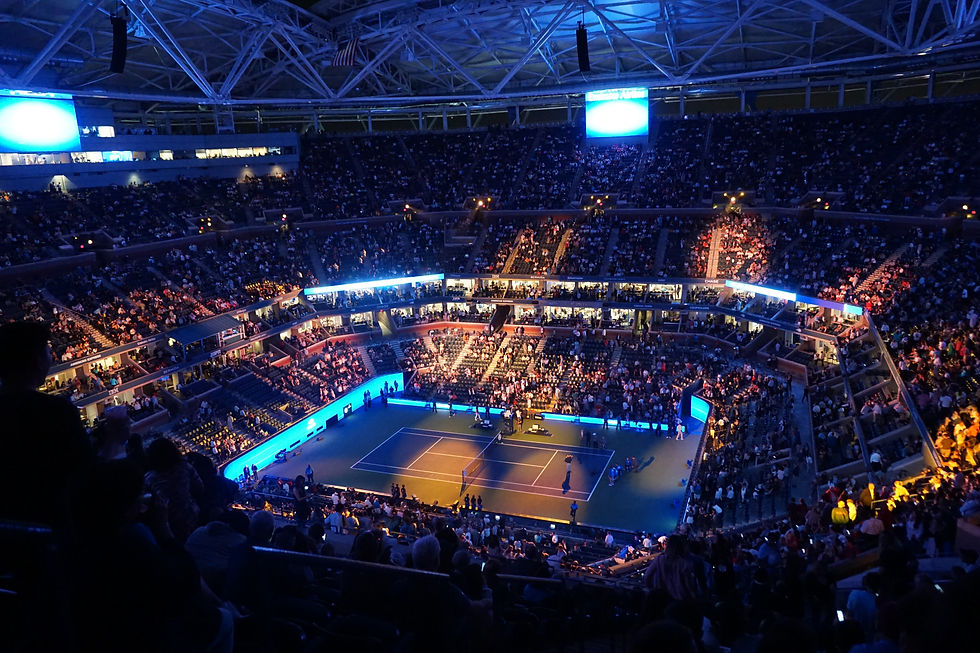
How to Arrive at the US Open 2026 with Private Transportation
For executives attending the 2026 US Open, the strongest transportation plan begins with the moment that matters most: when the principal should be ready to enter the event environment.
VIP NYC Transfers can structure private transportation from Manhattan, JFK Airport, LaGuardia Airport, Newark Liberty International Airport, Teterboro Airport, or another agreed origin around that arrival objective, with measured planning and discreet concierge coordination.
To reserve chauffeur services, share the date and session, origin, passenger count, preferred vehicle profile, any hospitality or guest commitments, and the time the executive ideally needs to be venue-ready. The concierge team can then structure the arrival around the actual purpose of the evening rather than a generic estimate between two addresses.
FAQ Section
What is the best way for an executive to arrive at the US Open with private transportation?
The strongest approach is to plan backward from when the executive needs to be venue-ready rather than relying only on estimated driving time. The brief should account for origin readiness, hospitality or guest commitments, current venue conditions, the intended arrival point, and who has authority to communicate changes.
How early should an executive leave Manhattan for the US Open?
There is no responsible universal departure time because the appropriate window depends on the Manhattan origin, session, hospitality commitments, guest movements, and current event conditions. The schedule should distinguish chauffeur positioning, principal departure, and the desired venue-ready time rather than applying an arbitrary buffer.
Can VIP NYC Transfers provide US Open 2026 private transportation from Manhattan?
Yes. VIP NYC Transfers can coordinate private transportation from Manhattan to the US Open based on the principal’s origin, passenger count, session timing, guest requirements, and intended arrival window.
Can an executive travel directly from an NYC airport to the US Open?
Yes, when the itinerary supports it. The decision should be based on the traveler’s actual airport departure readiness, luggage, guest plans, desired preparation or recovery time, and the purpose of the evening rather than scheduled landing time alone.
Is LaGuardia Airport the simplest airport for reaching the US Open?
Its Queens location may make LaGuardia geographically convenient for the National Tennis Center, but proximity alone should not determine the plan. Actual flight timing, terminal departure, luggage, event conditions, and the executive’s obligations before entering the venue remain relevant.
Can a chauffeur guarantee an exact drop-off point at the US Open?
A responsible provider should not guarantee a curbside outcome controlled by venue or event authorities. Official US Open transportation procedures and event-day routing can affect the final approach. The appropriate standard is a clear arrival plan with realistic expectations and the ability to adapt to current instructions.
What should an executive assistant provide when reserving US Open chauffeur services?
The most useful brief includes the event date and session, pickup origin, passenger count, principal contact preference, hospitality timing, other guests involved, desired venue-ready time, and any relevant airport, hotel, meeting, or post-event dependencies.
Should an executive choose the vehicle before deciding the US Open arrival plan?
Usually not. Passenger count and vehicle preference matter, but the operating brief should first establish the principal’s timing, guest composition, origin, arrival objective, and communication requirements. The vehicle can then be selected to support those conditions rather than becoming the plan itself.



Comments