
Private Transportation for the World Cup Final at MetLife Stadium
- M

- 2 days ago
- 9 min read
For an executive team, private transportation for the World Cup Final at MetLife Stadium is a governance decision before it is a vehicle decision. The match is scheduled for Sunday, July 19, 2026, at 3:00 PM; MetLife Stadium lists doors at 11:00 AM and parking lots at 10:00 AM. Those published times define the event window, but they do not determine who may delay departure, change the passenger plan, redirect the principal, or approve a different post-match outcome. That authority must be established privately, before the day becomes compressed. executive may be moving from a Midtown hotel, a residence on the Upper East Side, an arrival through Newark Liberty International Airport, or a private aviation terminal near Teterboro. Advisors, family members, sponsor guests, and colleagues may join at different points. The operational risk is not that the itinerary contains several moving parts; it is that several people may believe they can control them. When authority is unclear, the principal becomes exposed to delay, repeated calls, public negotiation, and preventable uncertainty.
This briefing examines one question only: how should an executive team establish a Final-day command structure that protects the principal without making the plan rigid? It does not revisit generic comfort, broad traffic commentary, or the usual comparison of vehicle categories. Its subject is decision control: who sets the objective, who communicates changes, who executes them, and what happens when the preferred sequence is no longer available.
Table of Contents

The World Cup Final Creates a Decision-Rights Problem
The Final is often planned as a sequence of locations: hotel, hospitality, stadium, dinner, residence, airport, or private aviation terminal. That map is necessary, but incomplete. An executive itinerary is governed by decision rights, not addresses alone. A location can remain unchanged while the operating meaning changes entirely: a guest may arrive late, a hospitality window may narrow, the principal may choose to leave early, or a return movement may split into separate destinations.
In ordinary circumstances, assistants and advisors can resolve those changes through conversation. Final day compresses that process. Messages arrive from guests, security contacts, hotel personnel, ticketing teams, and venue-side hosts while the chauffeur requires one clear instruction. The moment several stakeholders begin issuing parallel directions, coordination turns into arbitration. The principal should not become the person who reconciles competing preferences inside the vehicle or at the stadium perimeter.
The first planning task is therefore to identify which decisions belong to whom. The principal may define the desired experience; the executive assistant or chief of staff may own the itinerary; the transportation operations team may control execution; and a designated advisor may approve contingencies. Clarity is not hierarchy for its own sake—it is a way to prevent low-value questions from reaching the highest-value traveler.
The Final-Day Command Protocol
VIP NYC Transfers’ recommended planning lens is the Final-Day Command Protocol, a five-part model designed for executive movements in which timing, access, hospitality, and guest expectations can change at once. The protocol separates protection, authority, translation, execution, and recovery. Each element answers a different question, and each should be assigned before chauffeur details are circulated.
Protect: Define the principal’s non-negotiable outcomes.
Authorize: Identify who may approve a material change.
Translate: Appoint one person to convert executive intent into instructions.
Execute: Allow the chauffeur and operations team to act from confirmed information.
Recover: Establish acceptable alternatives before the preferred plan becomes unavailable.
Protection defines the non-negotiables. These may include the principal’s desired arrival posture, a private aviation departure, a board commitment the following morning, a spouse’s separate return, or a requirement that the principal not wait for late guests. A plan becomes calmer when the team knows what must be protected even if lesser details change. Without that distinction, every adjustment appears equally important and the day becomes unnecessarily fragile.
Authority identifies who may alter the plan. Translation establishes the single person who converts executive intent into an actionable instruction. Execution belongs to the chauffeur and operations team, working from confirmed information rather than a stream of opinions. Recovery defines the pre-authorized alternatives if the preferred sequence no longer serves the principal. The protocol is effective because it reduces ambiguity without pretending that Final day will be perfectly predictable.
Private Transportation for the World Cup Final at MetLife Stadium Needs One Voice
For private transportation for the World Cup Final at MetLife Stadium, the most valuable communication principle is simple: the chauffeur should receive one operational voice, even when many stakeholders remain informed. This does not diminish the role of family members, advisors, security professionals, hotel teams, or hospitality hosts. It protects them from creating conflicting instructions at the point of execution.
The designated contact should understand the principal’s priorities and have permission to make practical decisions within agreed limits. That person might be an executive assistant, chief of staff, family office representative, security lead, or senior advisor. The title matters less than the authority attached to it. A contact who must seek approval for every minor adjustment cannot perform the role effectively when departure timing is narrowing.
Communication discipline also requires restraint. The principal does not need every operational update, and the chauffeur does not need every stakeholder discussion. A well-designed chain filters information in both directions: relevant changes reach operations, while routine execution remains quiet. Discretion is partly the art of deciding what not to escalate.
The Principal Should Not Be Bound to the Slowest Guest
Executive hospitality often encourages inclusiveness: colleagues travel together, hosts wait for invited guests, and a senior principal extends courtesy to the group. Those instincts are appropriate until they begin to control the principal’s schedule. A shared invitation does not require a shared operational dependency. The transportation plan should distinguish social cohesion from decision authority.
Before departure, the team should decide how long the principal will wait, whether another vehicle may support delayed guests, and who may authorize separation. The same logic applies after the match, when different travelers may want to remain for hospitality, leave immediately, return to Manhattan, or continue toward Newark or Teterboro. Planned separation is often more considerate than forcing the entire party into a single compromise.
This does not mean every executive group requires multiple vehicles. It means capacity should follow the command model. One vehicle may be entirely appropriate for an aligned party with one origin and one return. A coordinated vehicle structure may be more suitable when guest timing, privacy, luggage, or onward commitments differ. The correct question is not how many people fit; it is which dependencies the principal should accept.
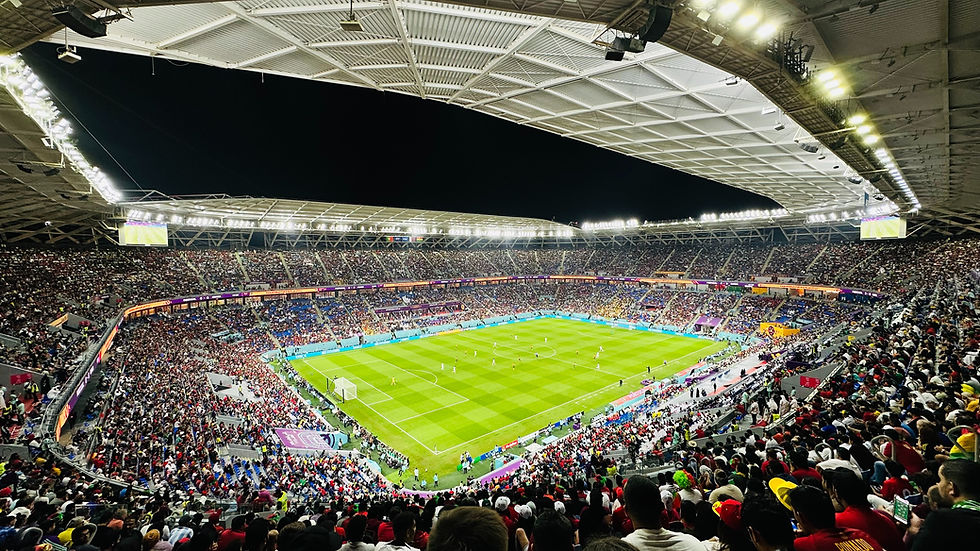
The Venue Threshold Is Where Authority Becomes Visible
At MetLife Stadium, the transition between vehicle, controlled access, walking route, credential check, hospitality entrance, and seating environment is not merely a physical threshold. It is the point where unclear authority becomes publicly visible. A group that pauses to debate where to proceed, waits for an absent guest, or receives contradictory instructions may appear disorganized even when the underlying issue is minor.
The executive team should decide in advance who leads once the party leaves the vehicle, who remains connected to the chauffeur, and what the principal should do if a guest or host is not immediately available. Transportation cannot override venue rules, security direction, or event controls. Its role is to preserve composure around those realities by ensuring the group knows who decides what happens next.
The same principle applies on departure, when attention is lower and preferences become more varied. One person may want to remain, another may be concerned about an airport departure, and the principal may simply want the most direct return. The command structure should already contain the answer. The departure environment is not the place to design the recovery plan; it is the place to execute it.
Airports, Hotels, and Hospitality Must Report to the Same Plan
Executives attending the Final may begin or end the day at JFK Airport, LaGuardia Airport, Newark Liberty International Airport, Teterboro Airport, a Manhattan hotel, a private residence, or a sponsor hospitality setting. These environments have different timing logic, but they should not operate as separate transportation decisions. A delayed arrival, extended reception, or revised aviation schedule can affect the same principal and must be read through one command structure.
Hotel coordination illustrates the point. A vehicle may be positioned correctly while the principal, guests, luggage, credentials, and hotel contact are not yet aligned. The designated itinerary authority should determine when the departure is truly ready, while operations manages vehicle positioning and access. The hotel entrance is not simply a pickup point; it is the first test of whether the command protocol is functioning.
Hospitality commitments require similar discipline. A sponsor greeting or private reception may be meaningful, but it should not quietly take precedence over the principal’s protected outcome unless the authorized contact approves that change. Executive transportation is strongest when relationship obligations are respected without allowing them to rewrite the itinerary by default.
Discovery Should Begin With Authority, Not Inventory
A discovery conversation often begins with party size and vehicle preference. Those details matter, but for this event they should follow a more important inquiry: what must the transportation plan protect, and who has authority to protect it? Once that is clear, vehicle structure, staging, communication, and contingency planning can support the executive objective rather than define it.
The most useful initial information includes the principal’s origin, guest composition, hospitality commitments, airport or private aviation timing, preferred arrival posture, expected return, and designated decision-maker. It should also identify any traveler whose schedule must not control the principal. This is not excessive detail; it is the minimum information required to convert a reservation into an operating plan.
VIP NYC Transfers approaches the Final as a coordinated executive movement rather than an isolated transfer. The objective is not to promise control over venue restrictions or every external variable. It is to establish a disciplined structure for the decisions that can be controlled. When authority, communication, and recovery are defined early, the principal experiences less operational noise—even when the day changes.
Comparison Matrix
Operating model | Decision authority | Instruction flow | Principal exposure | Contingency posture |
VIP NYC Transfers reference standard | Principal priorities and change authority defined before service | One designated contact communicates with the chauffeur and operations team | Principal is insulated from routine coordination and competing guest preferences | Acceptable alternatives established around the protected itinerary outcome |
Vehicle-only reservation | Usually assumed rather than documented | Instructions may come from any passenger or organizer | Principal may absorb delays, questions, and last-minute negotiation | Changes addressed only when the preferred plan fails |
Multiple uncoordinated stakeholders | Shared informally among assistants, guests, hosts, and security contacts | Parallel messages can create conflicting directions | Principal becomes dependent on the loudest or slowest stakeholder | Each party proposes a different response |
Guest-led event plan | Social preferences influence operational decisions | Group consensus is sought during compressed moments | Executive timing may be subordinated to courtesy or indecision | Separation is treated as an emergency rather than an authorized option |
Defined internal contact without clear authority | One person communicates but cannot approve meaningful changes | Instructions pause while senior approval is requested | Principal may still be interrupted for practical decisions | Alternatives exist but cannot be activated efficiently |

Executive Private Transportation for the World Cup Final at MetLife Stadium
For executives, chiefs of staff, assistants, and private advisors beginning to coordinate the Final, VIP NYC Transfers can help establish the transportation command structure before individual movements are finalized.
Share the principal’s origin, number and composition of guests, hospitality commitments, airport or private aviation requirements, expected return posture, and the person authorized to approve changes. Our concierge team will evaluate the itinerary as one executive operating plan and advise on an appropriate private transportation structure with discretion, precision, and measured operational judgment.
Frequently Asked Questions
What should executive teams decide before requesting private transportation for the World Cup Final at MetLife Stadium?
They should identify the principal’s protected outcomes, the authorized decision-maker, the designated operational contact, the guest hierarchy, the desired arrival posture, and the acceptable post-match alternatives. These decisions should precede vehicle selection.
Who should serve as the primary transportation contact on Final day?
The primary contact should be someone who understands the principal’s priorities and has authority to approve practical changes. This may be an executive assistant, chief of staff, family office representative, security lead, or trusted advisor.
Should the principal and all invited guests travel together?
Not necessarily. A shared vehicle may work when the party has one origin, one schedule, and one return plan. Separate or coordinated vehicles may be more appropriate when guests have different timing, hospitality commitments, privacy requirements, or onward destinations.
Can private transportation override MetLife Stadium access or security restrictions?
No. Private transportation remains subject to venue rules, security direction, traffic controls, credential requirements, and event-day access limitations. Its role is to plan intelligently around those conditions and maintain an orderly communication structure.
How should Newark or Teterboro timing be incorporated into the Final-day plan?
Airport and private aviation movements should be treated as part of the same executive itinerary rather than separate reservations. Arrival variability, luggage, terminal procedures, guest coordination, and onward departure requirements can materially affect the match-day command structure.
When is a multiple-vehicle structure more appropriate?
It may be appropriate when the principal should not wait for delayed guests, travelers have separate destinations, family members and colleagues require different schedules, luggage affects capacity, or the principal needs an independently protected departure.
What information should be provided when requesting coordination?
Provide the principal’s origin, passenger count and hierarchy, hotel or residence details, hospitality timing, airport or private aviation information, luggage requirements, preferred arrival posture, expected post-match destination, and the contact authorized to approve changes.


Comments