Private Transportation for Diplomatic Events in New York City

Updated: Oct 6
Private transportation for diplomatic events in New York City is not simply a matter of placing a vehicle outside a hotel or airport. It is a discipline of timing, discretion, and controlled visibility in one of the most compressed cities in the world. For diplomatic travelers, the transportation decision touches protocol, privacy, airport timing, hotel coordination, venue access, family considerations, and the expectations of aides who need every movement to feel calm, precise, and already solved.
New York intensifies those requirements because official and semi-official programs rarely unfold in one place. A delegation may arrive through JFK Airport, continue to Midtown for meetings, attend an evening reception near Fifth Avenue, and depart the next morning through Teterboro Airport or Newark Liberty International Airport. Each segment may look straightforward on an itinerary, yet every segment carries variables: traffic patterns, curb access, building exits, schedule compression, and the need to preserve privacy without creating friction.
The central question is therefore not “which vehicle is available?” It is “which provider can manage the journey without making the work visible?” The best diplomatic transportation is measured by what the traveler does not have to think about: where the chauffeur will be positioned, how changes will be handled, whether airport timing is monitored, whether buffers are realistic, and whether the experience remains composed when the city does not.
Table of Contents

Diplomatic Transportation Is a Protocol Environment, Not a Vehicle Request
Diplomatic events operate within a different rhythm from ordinary executive movement. The traveler may be a principal, spouse, advisor, senior staff member, visiting dignitary, consul, mission representative, or family guest accompanying an official program. Each profile carries a different expectation of visibility, privacy, and timing. The transportation provider must understand that the vehicle is only one visible element of a larger protocol environment.
In this setting, small details shape the experience. A chauffeur positioned too visibly can create unnecessary attention. A poorly coordinated pickup can force a principal to wait in a lobby or depend on staff to solve a preventable issue. A delayed departure can compress the next meeting or disrupt an arrival sequence. Diplomatic transportation is not about speed; it is about controlled movement, clear handoffs, and the ability to keep the traveler insulated from avoidable operational noise.
The most capable operators think in sequences, not isolated transfers. They understand that the movement from an airport to a hotel may influence check-in timing, that hotel staging may affect a later arrival at a mission event, and that an evening departure from Midtown may require earlier positioning than a standard calendar suggests. This level of judgment matters because diplomatic guests often move through dense environments where the public-facing experience must remain effortless.
The Real Risk Is Time Compression
The most underestimated challenge is time compression. Diplomatic calendars are usually built around commitments, not street-level logistics. Fifteen minutes between a Midtown meeting and an Upper East Side reception may look plausible until elevator time, greetings, building exits, vehicle positioning, traffic, and arrival formalities are included. The itinerary may be correct on paper and still fragile on the ground.
This is where private transportation becomes a planning instrument. A seasoned chauffeur services team should review the sequence and identify where friction is likely to appear. Midtown cross-town movement, tunnel access toward New Jersey, Madison Avenue evening traffic, and airport approaches all require judgment rather than blind reliance on estimated drive times. The stronger standard is not aggressive movement; it is disciplined buffer management before pressure appears.
Time compression also changes the atmosphere around the traveler. When timing becomes uncertain, aides begin checking messages, hosts begin calling, and the guest becomes aware of pressure. That is precisely what professional private transportation should prevent. Reliability is not only arrival at the destination; it is the preservation of calm before arrival. The best planning makes that calm feel natural.
Airport Arrivals Set the Tone for the Entire Program
Airport arrivals for diplomatic travelers can look deceptively simple: track the flight, meet the guest, proceed to Manhattan. In practice, arrivals often carry the highest concentration of variables. JFK Airport, LaGuardia Airport, Newark Liberty International Airport, Teterboro Airport, and private aviation terminals each have distinct access patterns, curb conditions, timing risks, and communication requirements. Treating them as interchangeable is a common operational mistake.
Flight monitoring is necessary, but it is only the baseline. The provider must understand how the traveler will exit, who will communicate with the chauffeur, whether luggage handling will affect timing, and whether the guest values the fastest exit or the most discreet transition. A confused arrival creates doubt before the first meeting has begun. A composed arrival creates confidence in the entire New York program.
For mission staff, protocol teams, and private advisors, the evaluation should focus on arrival choreography. The right provider should know how to monitor, stage, communicate, and recover when the airport does not behave as expected. A late bag, early landing, changed terminal flow, or delayed exit should not become the traveler’s problem.
Discretion Must Be Operational, Not Decorative
In luxury language, discretion is often treated as a polished word. In diplomatic transportation, it must be operational. Discretion is the ability to protect information, reduce unnecessary exposure, and avoid behavior that signals importance more loudly than the occasion requires. For high-profile travelers, the most valuable experience is often the one that does not announce itself.
Operational discretion begins with communication hygiene. It means itinerary details are handled carefully, messages are limited to the right parties, and updates are practical rather than performative. It also means chauffeurs understand professional distance. Diplomatic guests may be formal, warm, pressed for time, or accompanied by people managing sensitive conversations. The chauffeur’s role is to support the journey without entering the center of it.
Vehicle presentation matters, but restraint matters more. The appropriate diplomatic experience is polished, comfortable, and quietly elevated. A refined vehicle, an immaculate cabin, and a chauffeur who understands timing can do more for confidence than any loud display of status. In this context, luxury is felt through control, not performance.
Multi-Stop Event Programs Need a Control Point
Diplomatic event transportation becomes more complex once the schedule includes more than one stop. A principal may attend meetings in Midtown, a luncheon near Wall Street, a reception on Madison Avenue, and a private dinner later in the evening. Each stop adds a new point of failure: venue access, timing drift, weather exposure, communication handoffs, and traffic changes. A multi-stop itinerary should never be treated as a chain of unrelated bookings.
What is required is a control point. That may be a designated aide, an event planner, or the transportation provider’s coordination contact. The purpose is to keep the journey coherent as conditions change. When a meeting extends, the next arrival should be recalculated. When a reception runs long, the chauffeur should remain positioned and reachable. When the order of stops changes, communication should remain calm, concise, and structured.
This is especially important because diplomatic programs often evolve during the day. Meetings extend. Hosts request a different entrance. A spouse or family member may need a separate departure. A late return may require particular privacy. The provider must be able to absorb these changes without creating visible friction for the guest.
The Behavioral Standard Is Different for Diplomatic Guests
Diplomatic travelers often evaluate service through behavior rather than language. They may not comment on the route, the vehicle, or the coordination when everything is handled well. Their confidence is built through signals: the chauffeur is present without hovering, the vehicle is immaculate without being ostentatious, the communication is precise without being needy, and the timing feels protected without creating urgency.
This behavioral layer is frequently missed by providers that think luxury is primarily material. Diplomatic guests and their advisors notice restraint. They notice whether the chauffeur understands silence, whether questions are asked once and at the right moment, and whether changes are absorbed without making the traveler feel responsible for the adaptation. In this market, professionalism is not a script; it is judgment under social pressure.
The same standard applies to planners and intermediaries. A mission staff member, family office advisor, DMC, or protocol contact should not have to chase for basic confirmations. They should receive clean, usable information: vehicle confirmation, timing updates, chauffeur details when appropriate, and practical guidance that affects the journey.

How to Evaluate a Diplomatic Transportation Provider in NYC
The evaluation process should begin with operating questions, not vehicle photos. Refined vehicles matter, and they should meet the standard of the guest. But for diplomatic events, the more important question is whether the provider can protect the schedule, preserve privacy, and communicate with precision. A beautiful vehicle cannot compensate for unclear staging, late updates, or poor judgment around sensitive travelers.
A strong provider should be able to explain how airport arrivals are monitored, how chauffeur details are shared, how multi-stop changes are handled, and how communication is structured during event days. They should also be honest about timing risks. In New York City, a provider that promises everything without qualification may be signaling inexperience rather than confidence. VIP NYC Transfers is designed for clients who value a controlled journey, a refined standard, and a concierge layer that anticipates friction before the guest feels it.
The relationship should also feel appropriate for the audience. Diplomatic guests do not need mass-market urgency or pressure. They need a calm, capable partner who understands that the visible portion of the journey is only the final expression of careful preparation. That is the difference between transportation that merely happens and transportation that protects the program.
Comparison Matrix
Evaluation Criteria | VIP NYC Transfers | Standard App-Based Transportation | General Car Service | Hotel-Arranged Transportation |
Diplomatic suitability | Built for discretion, timing control, and high-profile movement | Not designed for protocol-sensitive movement | Varies by operator and chauffeur | Convenient, but often limited by hotel process |
Chauffeur standard | Professional, polished, discreet | Inconsistent | Variable | Usually professional, but not always specialized |
Airport coordination | Flight-aware, itinerary-aware, guest-aware | Basic pickup model | Often flight-aware, but may lack concierge layer | Often coordinated through concierge desk |
Multi-stop event handling | Structured around timing, staging, and schedule changes | Not ideal for complex programs | Possible, depending on provider | Possible, but may be less flexible |
Communication style | Calm, direct, appropriate for aides and planners | Transactional | Varies | Often filtered through hotel staff |
Privacy posture | High discretion and controlled communication | Limited | Varies | Moderate, depending on hotel process |
Best use case | Diplomatic events, executive arrivals, mission programs, private high-profile movement | Simple point-to-point needs | General transportation needs | Hotel guest convenience |
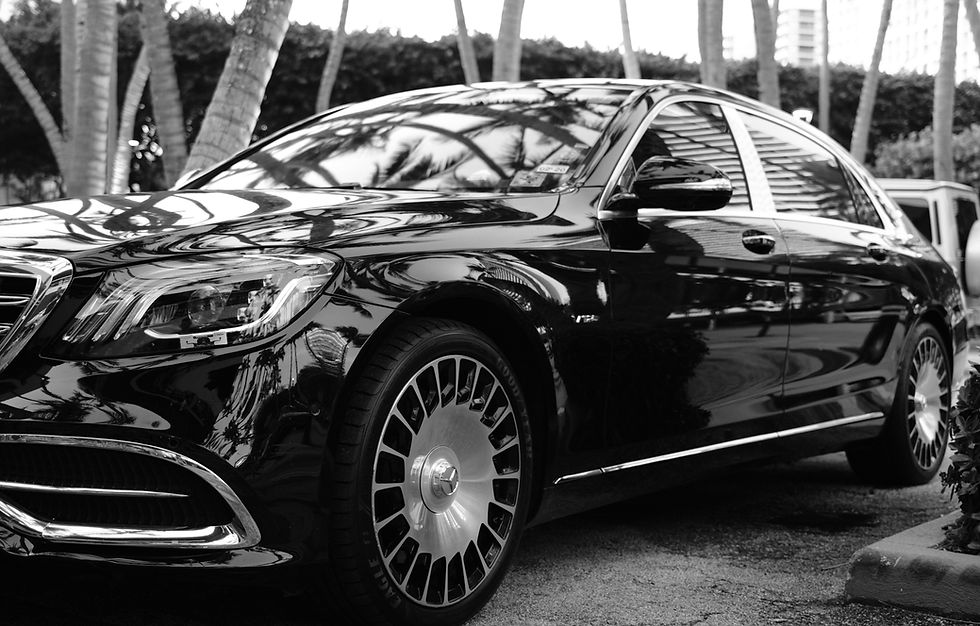
Private Transportation for Diplomatic Events in New York City
For diplomatic events, mission programs, executive arrivals, or private high-profile itineraries in New York City, VIP NYC Transfers provides discreet chauffeur services with refined vehicles, professional chauffeurs, and concierge-level coordination.
To discuss an upcoming program, share the itinerary details, airport information, timing requirements, guest profile, and any protocol considerations. Our team will respond with a measured recommendation designed around the journey, not simply the vehicle.
FAQ Section
What is private transportation for diplomatic events in New York City?
Private transportation for diplomatic events in New York City refers to discreet, professionally coordinated chauffeur services for diplomats, mission staff, dignitaries, official guests, and related travelers attending meetings, receptions, airport arrivals, and multi-stop programs across NYC.
Why does diplomatic transportation require a different standard?
Diplomatic transportation requires stronger attention to timing, privacy, communication, and protocol-sensitive movement. The experience must remain calm and controlled, especially when schedules change or high-profile travelers need to move through public environments discreetly.
Which airports are commonly involved in diplomatic transportation in NYC?
Common airports include JFK Airport, LaGuardia Airport, Newark Liberty International Airport, Teterboro Airport, and private aviation terminals. Each requires different planning around timing, access, guest handoff, and chauffeur positioning.
Can VIP NYC Transfers support multi-stop diplomatic event itineraries?
Yes. VIP NYC Transfers can support multi-stop itineraries involving airports, hotels, missions, consulates, corporate offices, receptions, private dinners, and event venues across Manhattan and the broader New York area, subject to availability and itinerary details.
What details should be provided before requesting a proposal?
Useful details include date, pickup and drop-off locations, airport or flight information, number of travelers, luggage profile, event schedule, preferred vehicle type, timing sensitivities, and any privacy or coordination requirements.
Is discretion part of the service?
Yes. Discretion is central to the service. It includes professional chauffeur conduct, careful communication, refined vehicle presentation, privacy-conscious coordination, and an approach designed to avoid unnecessary attention.
Is this service appropriate for diplomatic families and accompanying guests?
Yes. Private transportation can be arranged for principals, spouses, family members, senior staff, advisors, and official guests. Vehicle recommendations depend on the number of travelers, luggage requirements, schedule structure, and desired level of comfort.


